
The International Memorial of Notre-Dame-de-Lorette: The Ring of Memory
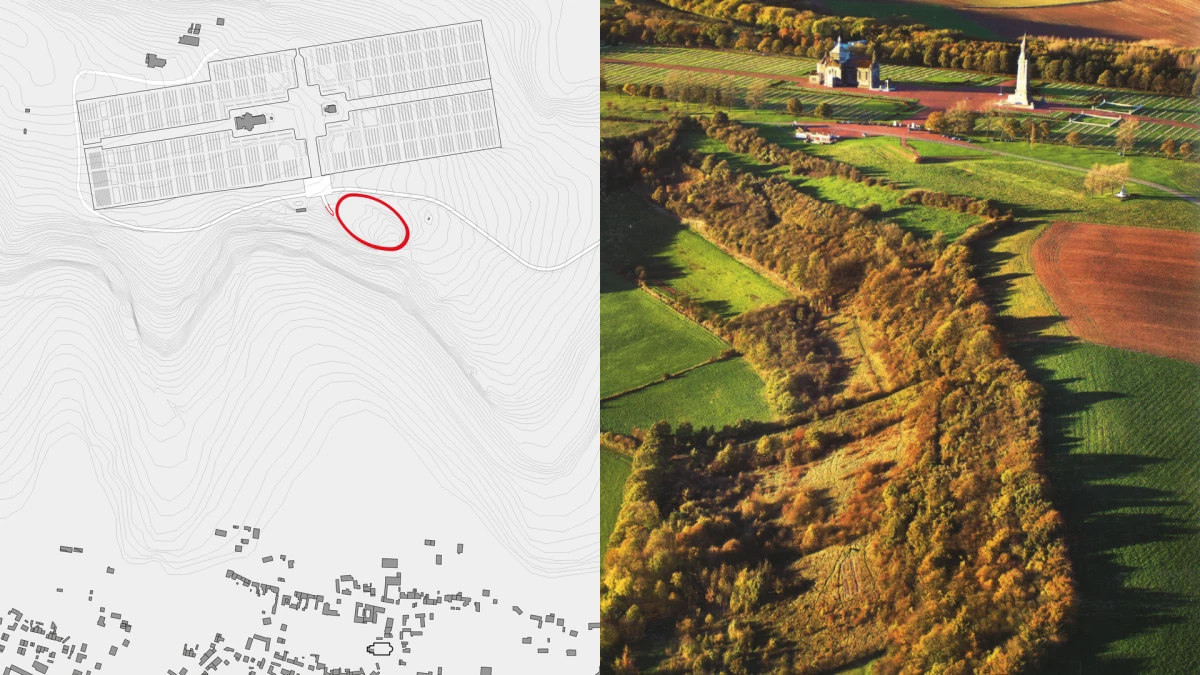
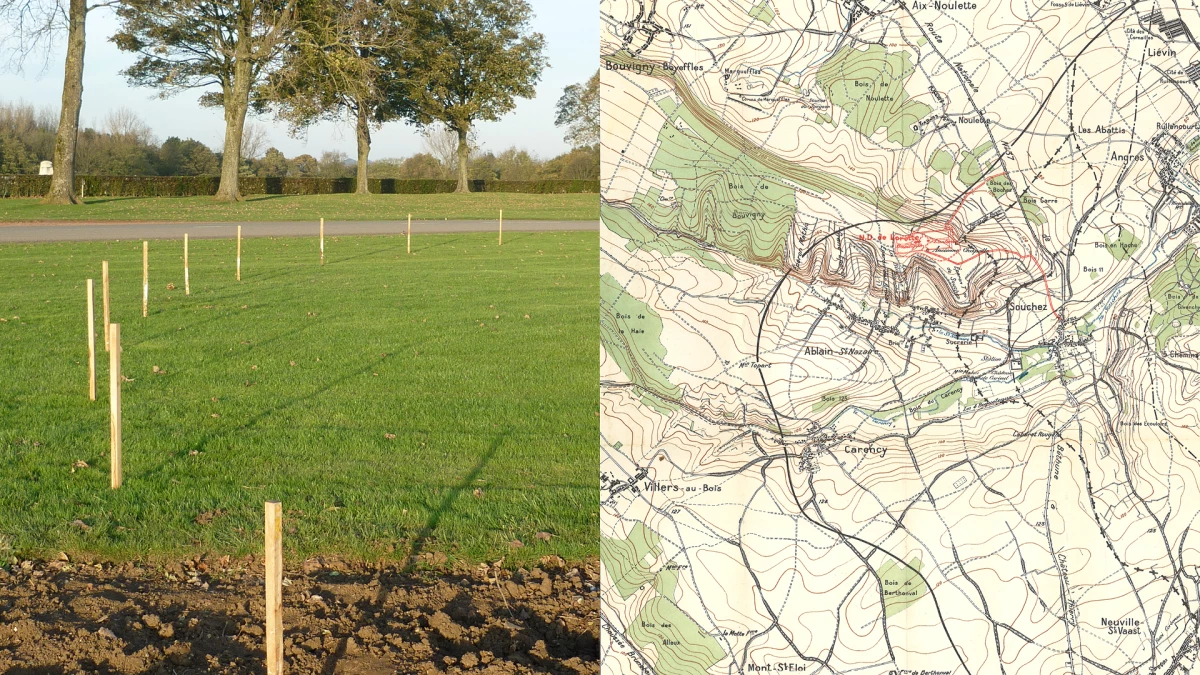
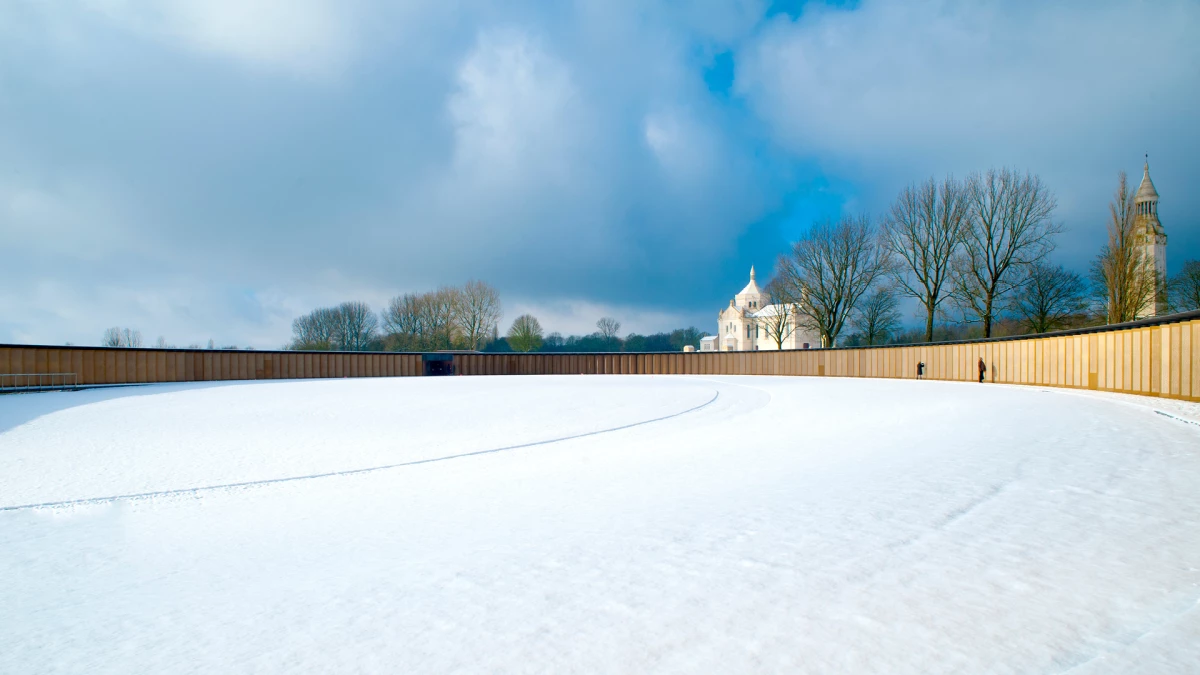
The Ring of Memory was built a century after the Armistice to embody our shared humanity and express peace. It adjoins France’s largest national war cemetery, which was built in 1925 on the hill of Notre-Dame-de-Lorette. This major site commemorates the end of the Great War and offers a commanding view over a plain that saw terrible fighting.
Lucas Monsaingeon, Project manager
C&E Ingénierie, Structural engineering
David Besson-Girard, Landscape architect
Yann Toma, Lighting design
BMF, Economist
BET Louis Choulet,MEP engineering
Luc Boegly
Pascal Rossignol Reuters
Howard Kingsnorth
Karine Warny
Philippe Frutier
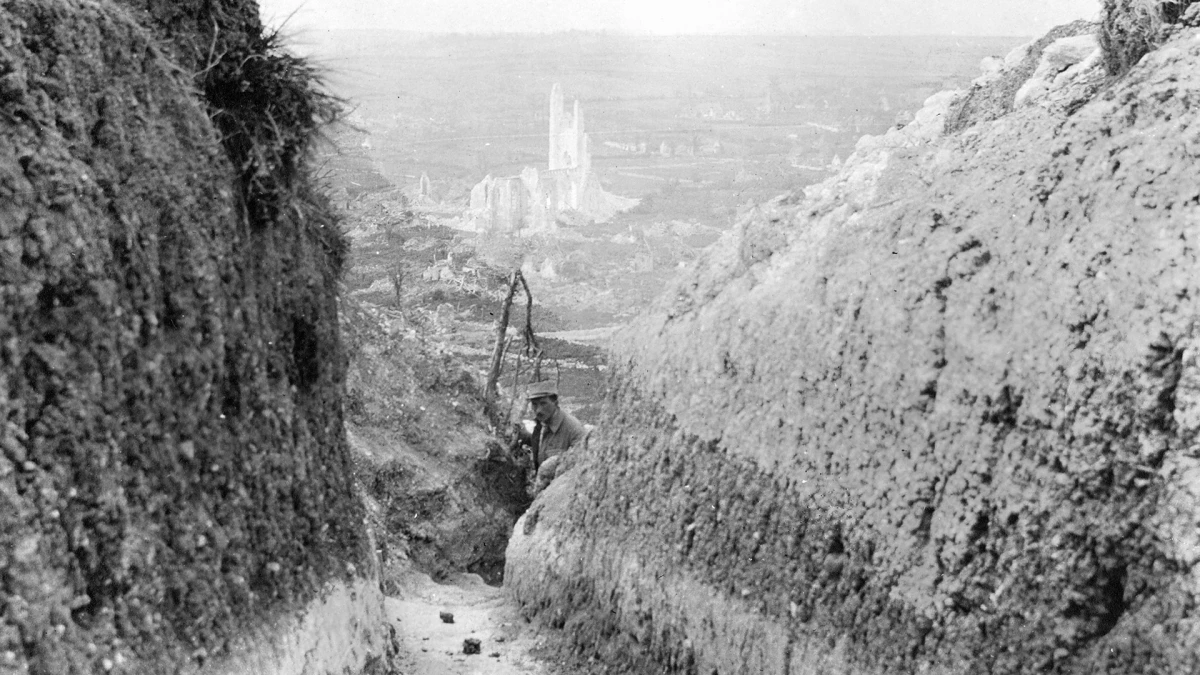
The meaning and purpose of the place reveal themselves to visitors in an immediate, intuitive way upon their arrival: a path is a cut through the earth, like a trench whose lateral walls expose the ground’s geological layers.
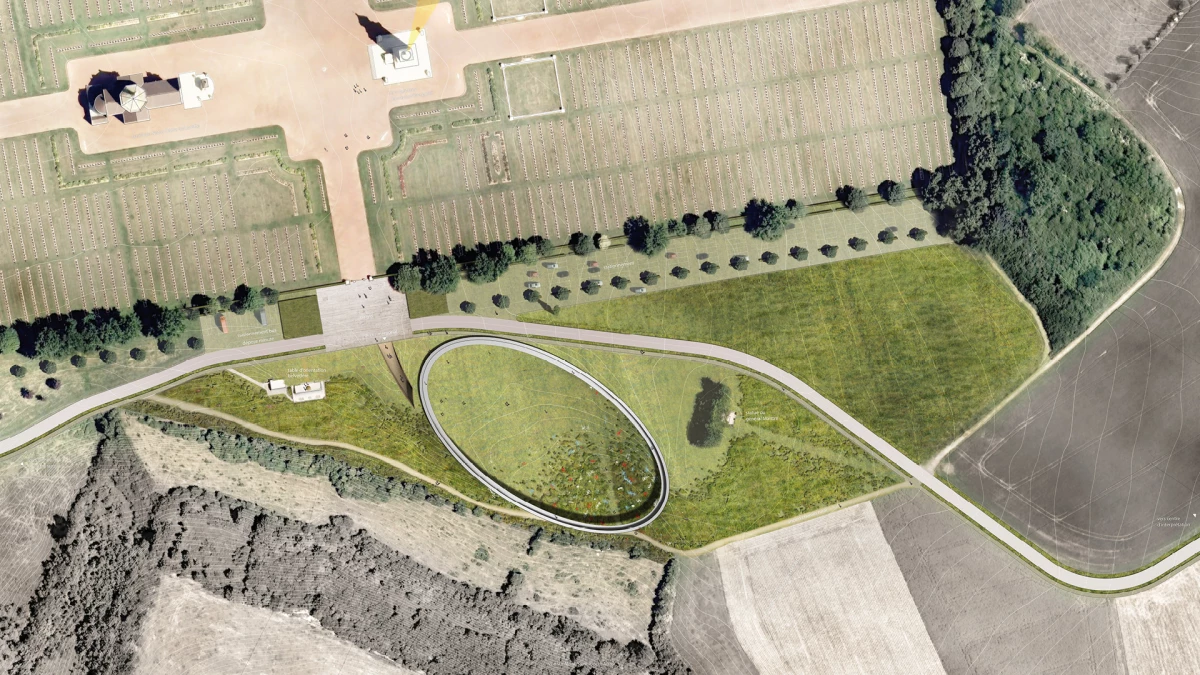
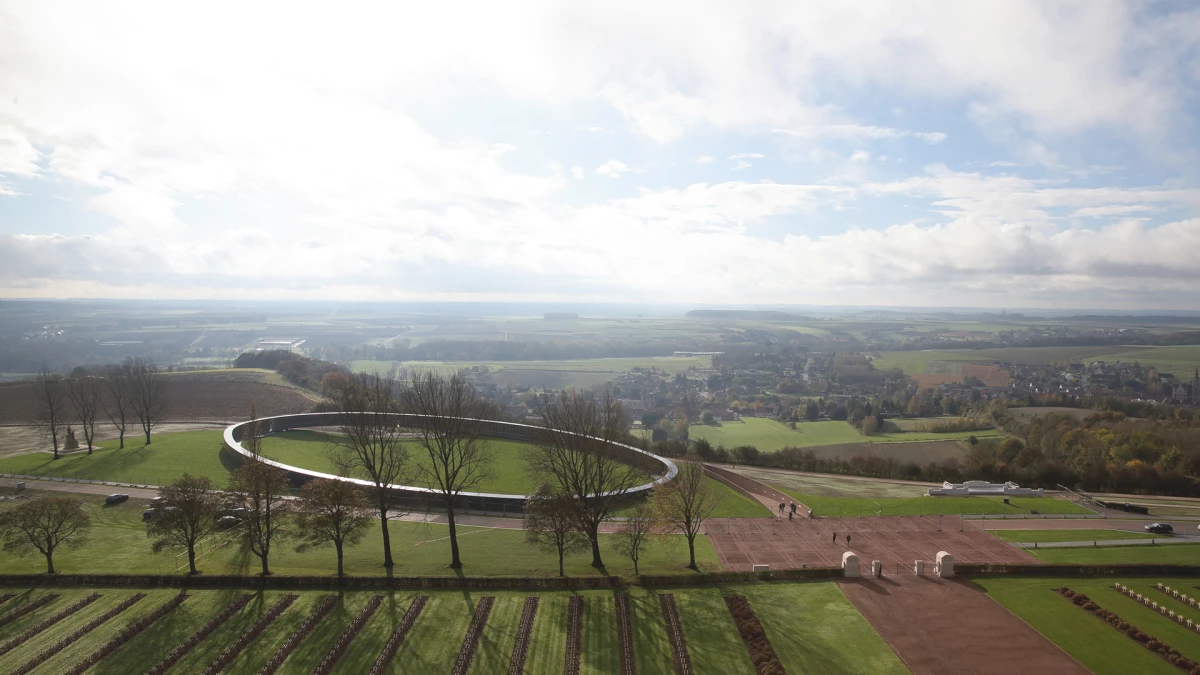
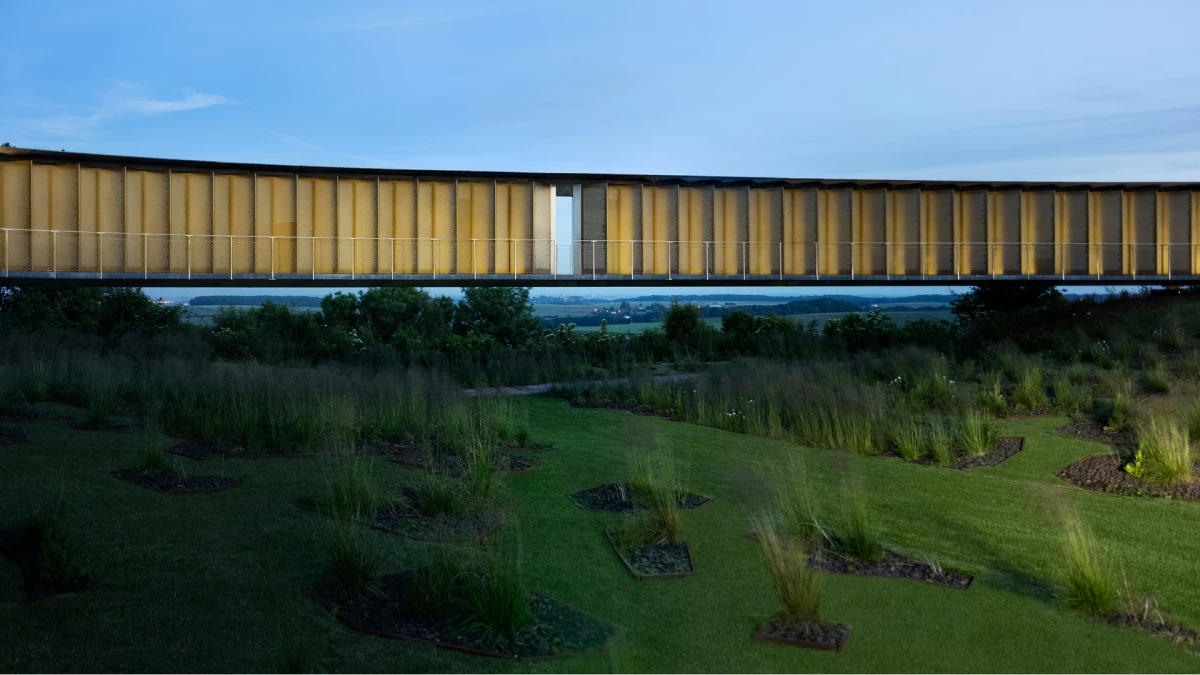
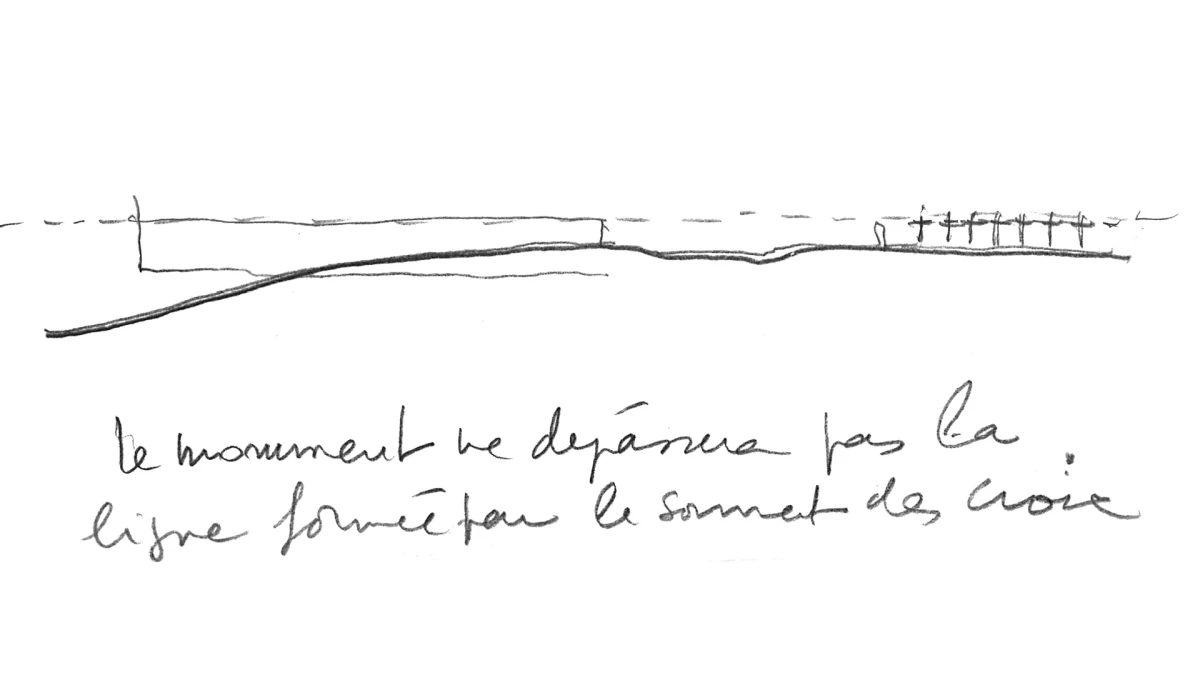
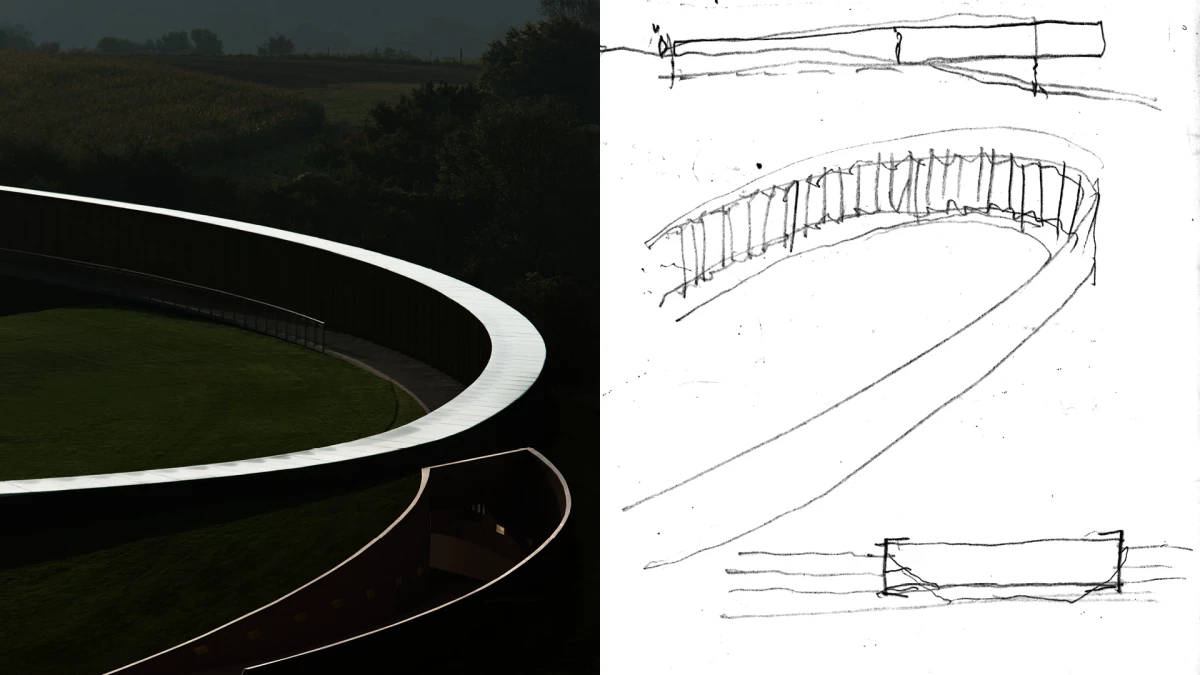
On one side the Ring is oriented towards the entrance to the war cemetery; on the other, it faces the Artois plain where the fighting took place. In doing so, it inscribes the memory of the dead into the space and celebrates a hard-earned peace. As nature asserts itself on the site, this vast landscape-scale structure simultaneously reawakens memories of its most terrible hours and brings a sense of calm. Its horizontal orientation represents balance and responds to the verticality of the cemetery’s lantern tower.
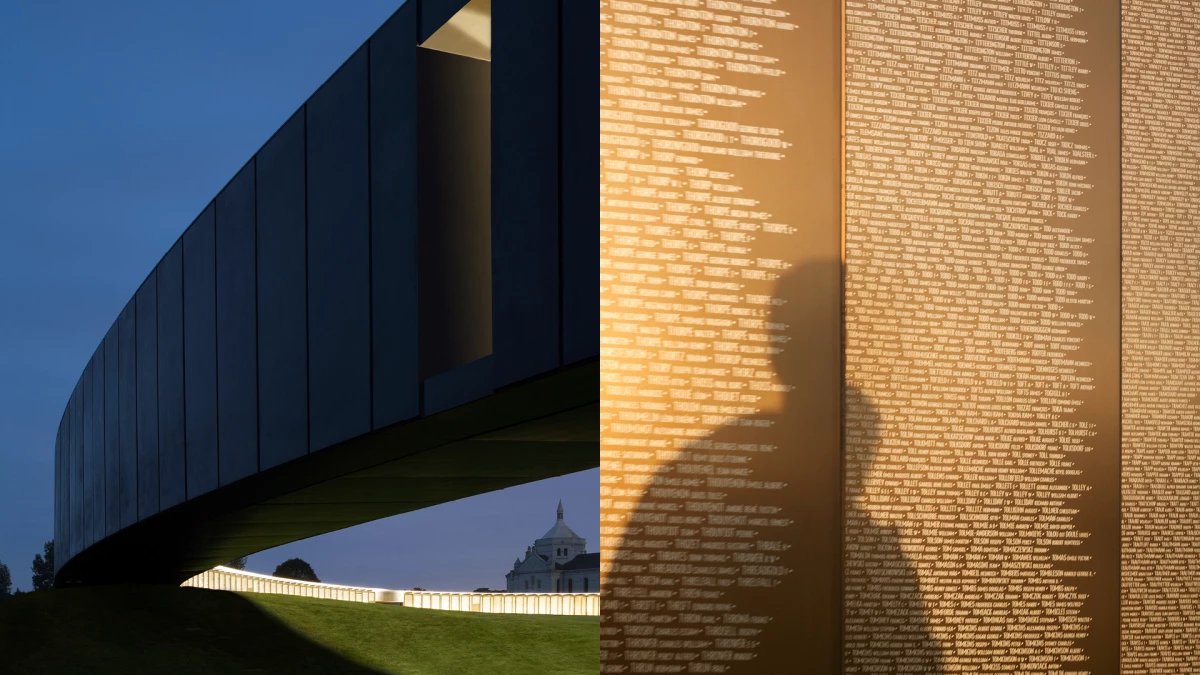
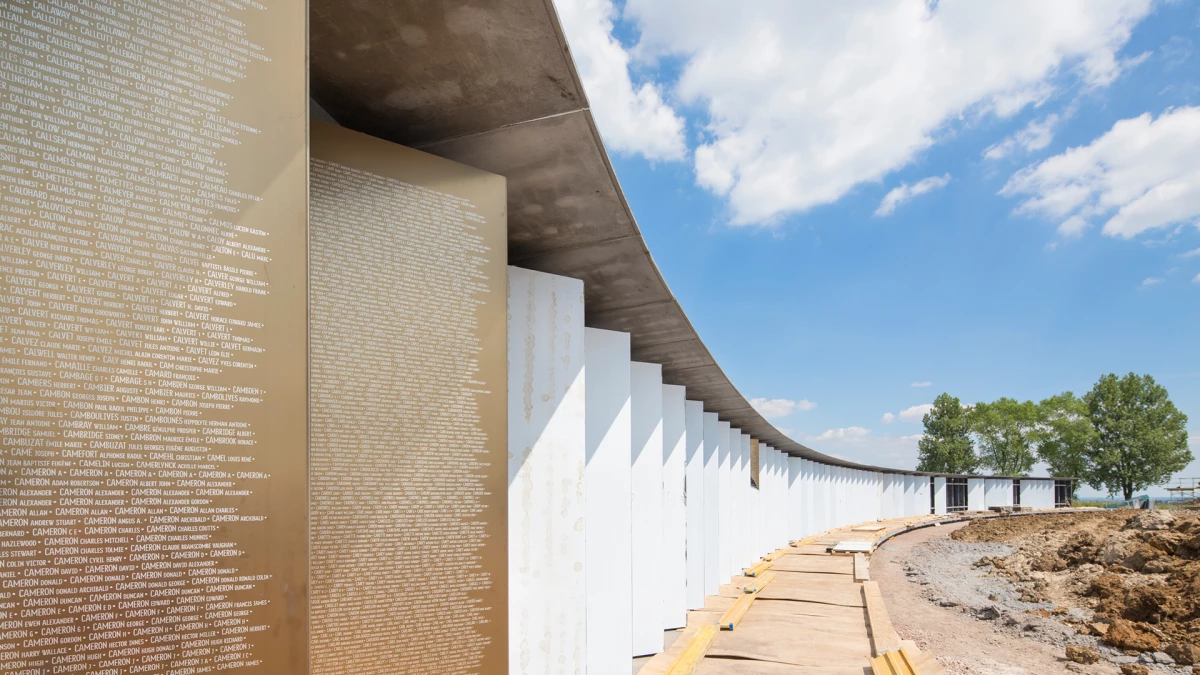
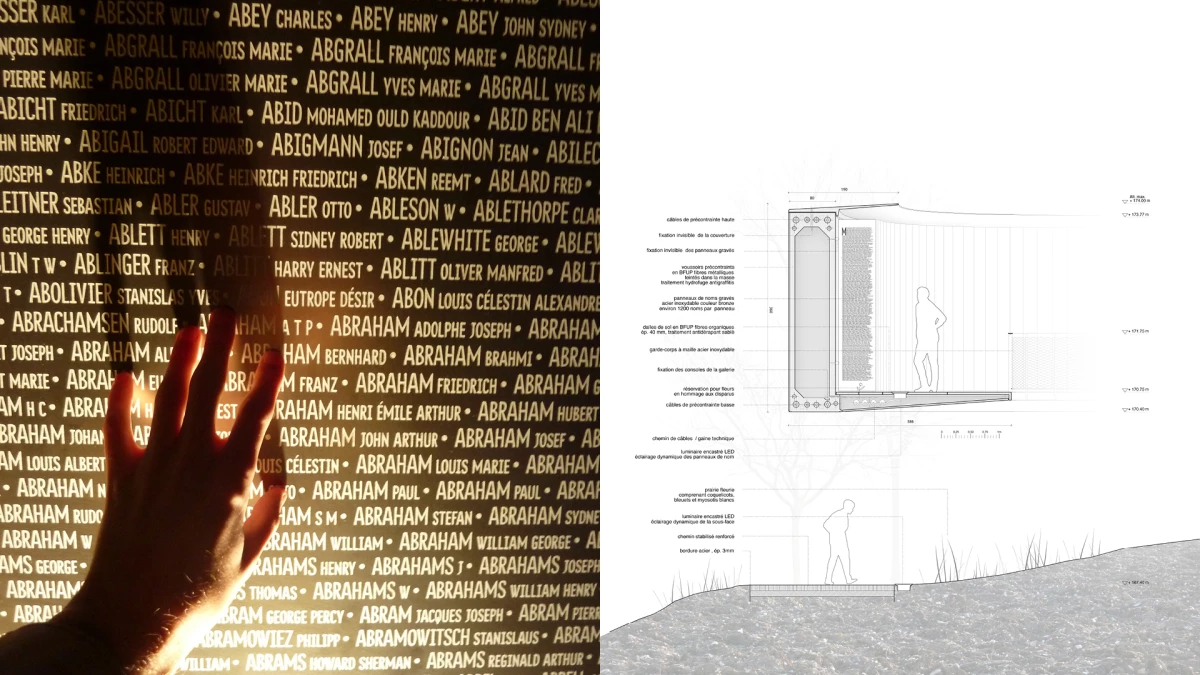
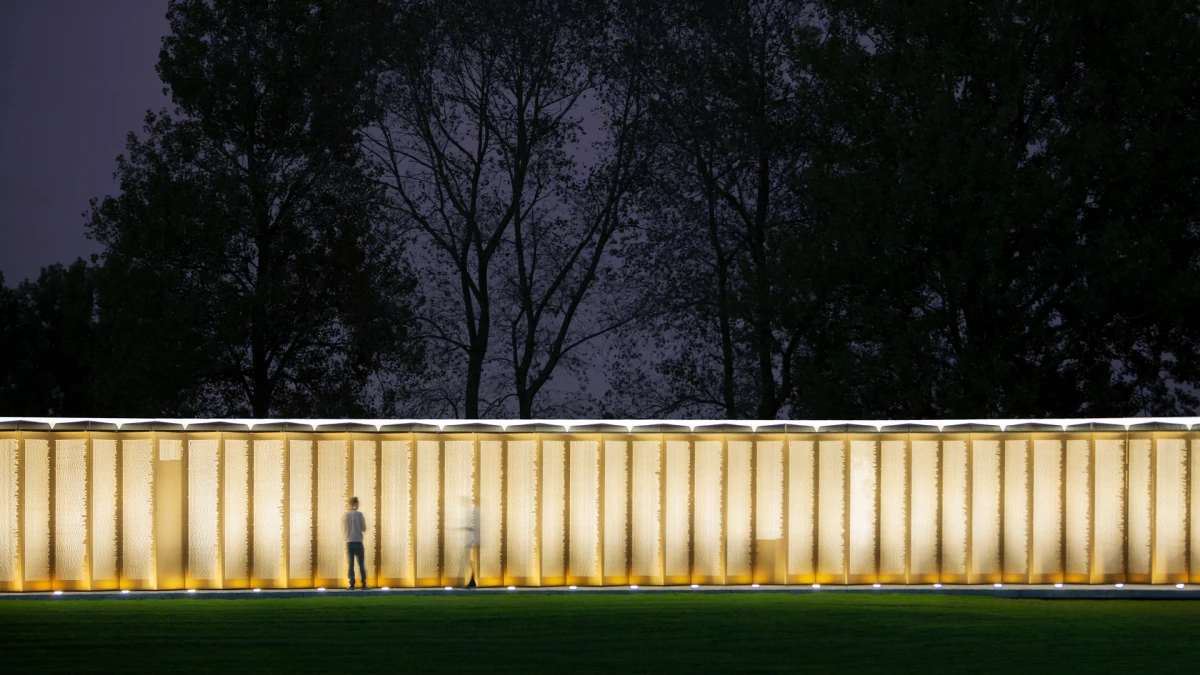
The Ring of Memory is a political gesture. It refuses withdrawal and proposes unity, fraternity, and solidarity between peoples. Horror must be transcended to build a peaceful future. Its geometry evokes a circular dance by people who would have been enemies in the past: the 600,000 combatants killed on the battlefields of the Nord-Pas-de-Calais. Their names are inscribed on the inner walls in alphabetical order, with no distinction between each person’s nationality, rank, or religion. The ring's unbreakable circular form links the combatants’ hands for eternity.
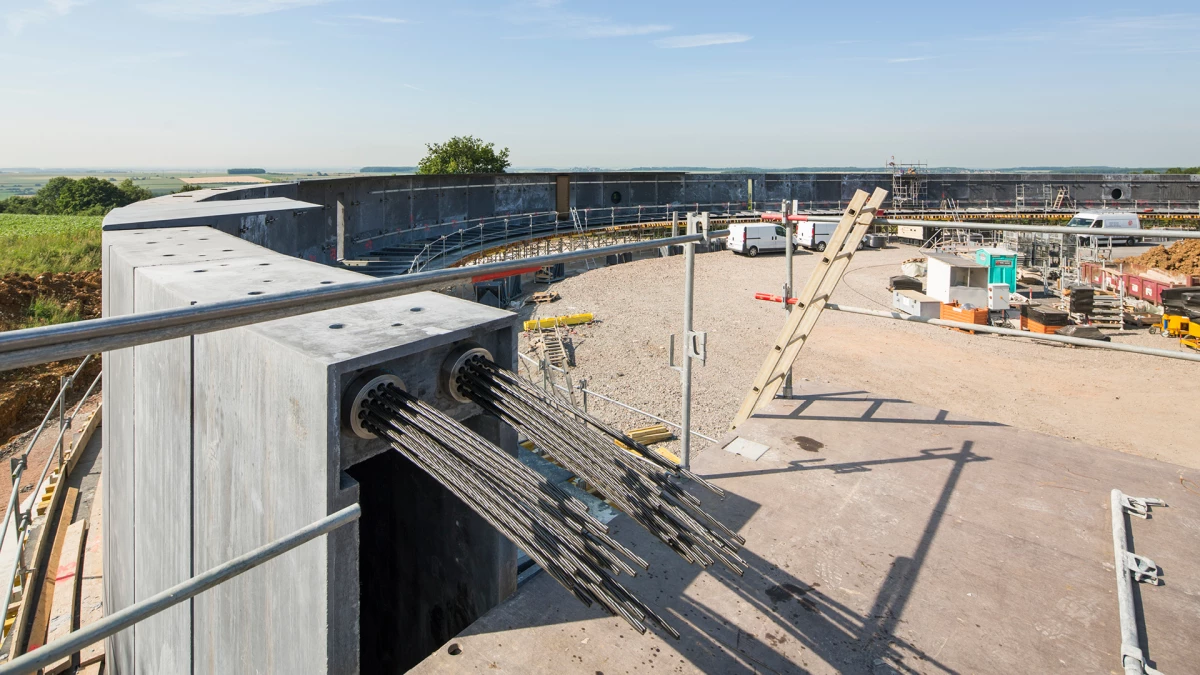
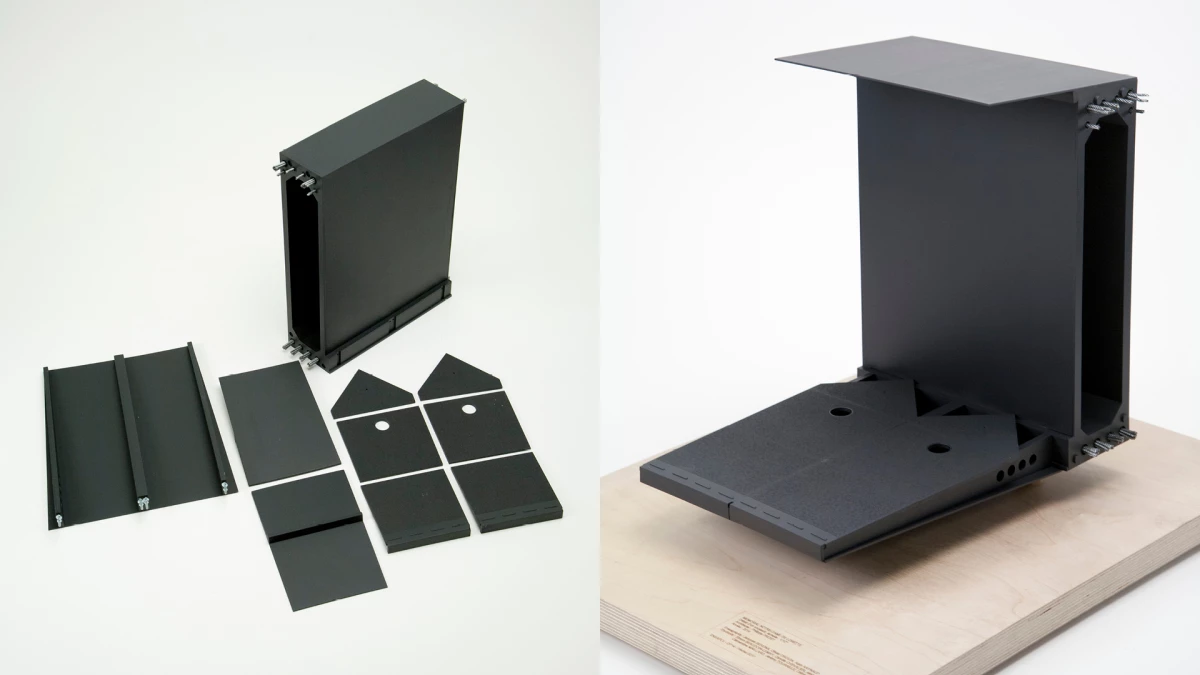
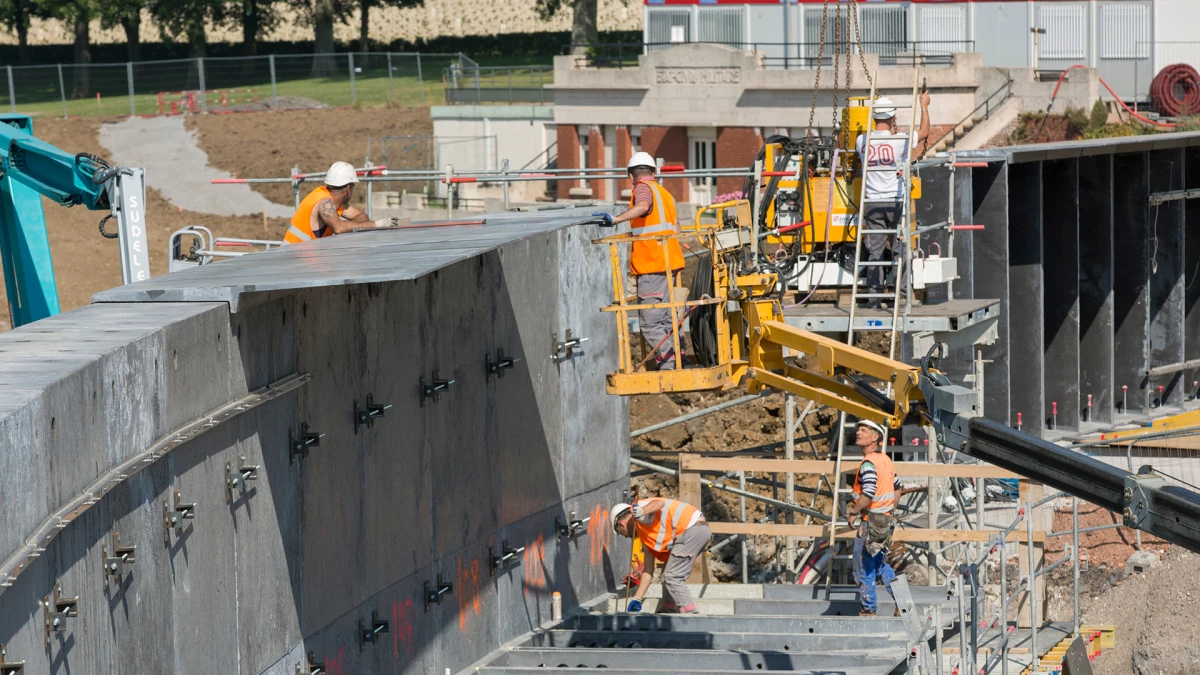
At more than 345 metres in circumference, the Ring of Memory is a work of art in every sense of the term. It is a technical feat as well as a monumental work that brings together art and nature. Anchored in the hillside for two thirds of its perimeter, the structure lifts free from the ground in a dramatic cantilevered section where the slope steepens. By reaching towards the horizon, it creates an uncertain void between itself and the hillside. This moment of suspended animation reminds us that peace is forever fragile. The use of a then-wholly novel material – High Performance Fibre-Reinforced Concrete – made this technical achievement possible, allowing this immense symbol of peace to defy the passage of time.