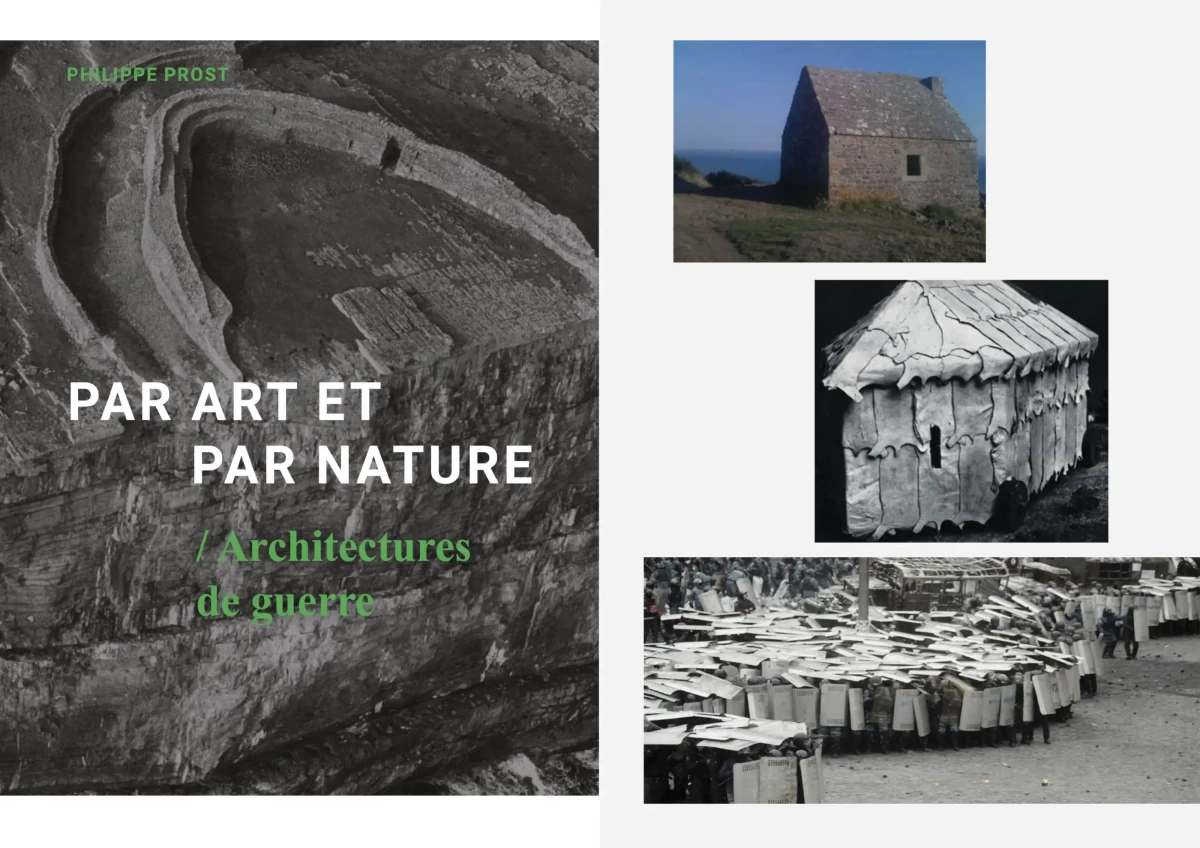
Military architecture remains a subject of major interest for the contemporary world. It always raises questions about place, because its formal originality and elegant designs correspond to technical and ballistic innovations of a given era rather than any specific style or taste. An economy of means and of natural resources lie at the heart of how the architecture of war is designed and lay the foundations for its longevity. From rehabilitating the Vauban citadels of Belle-Île-en-Mer, Lille and Arras to revitalising of Caen Castle, the publication Par art et par nature, architectures de guerre chronicles (By Art and by Nature, Chronicles of the Architecture of War) covers thirty-five years of research into how we understand and transform military heritage.
Research through projects
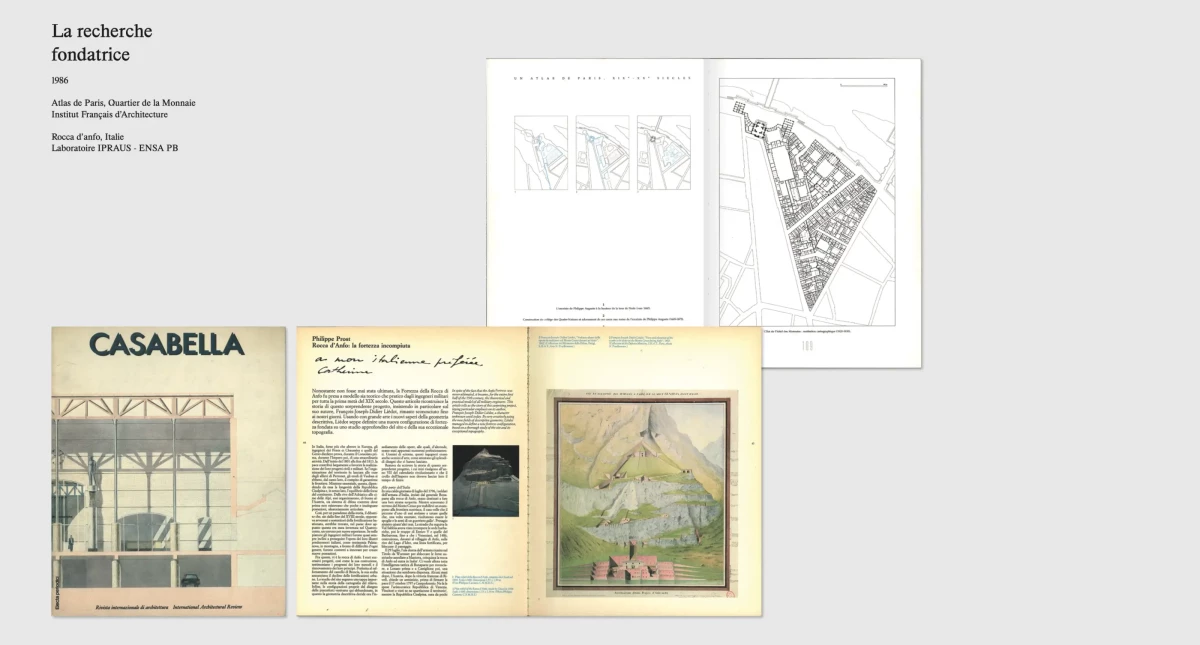
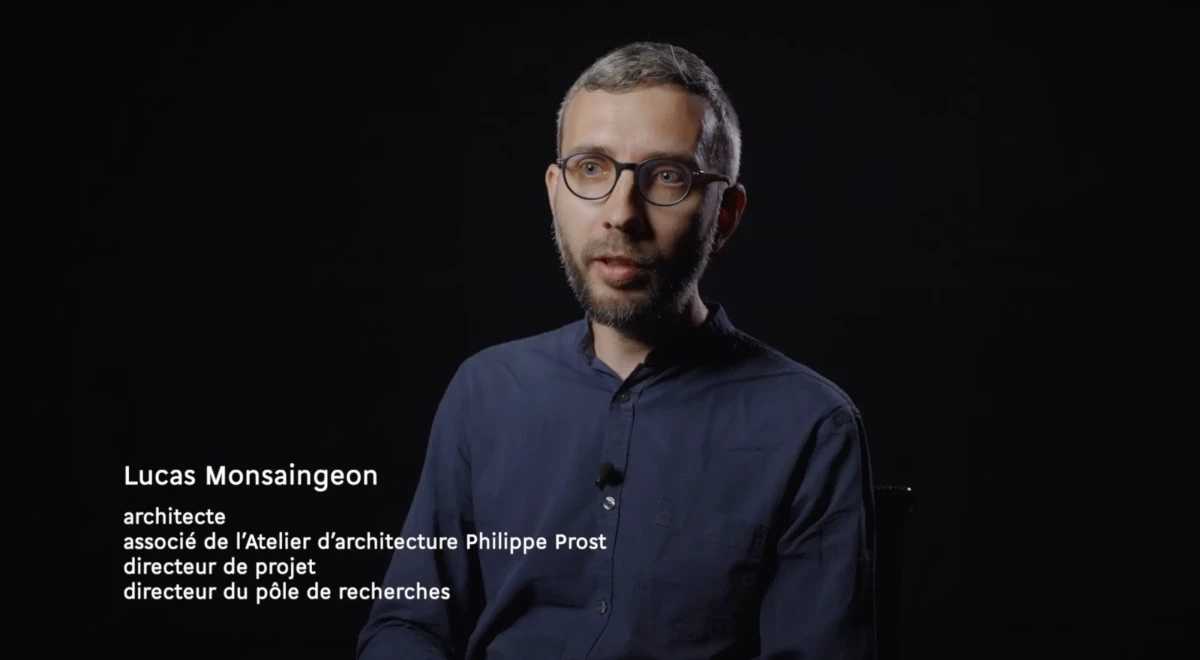
Research has become a critical part of the studio’s work, drawing on Philippe Prost's scholarly practice, and continues to expand in importance – notably in connection with the International Memorial of Notre-Dame-de-Lorette, which raised many technical and architectural issues related to construction and durability. Other research projects include the Cité des Électriciens, which required working with EDF on energy and environmental issues as well as recycling and use of organically sourced materials. The Nord-Pas-de-Calais mining basin – inscribed as a UNESCO World Heritage Site for its “living and evolving cultural landscape” – has become a locus of cross-disciplinary architectural research and experimentation for the studio with the support of the Caisse des Dépôts and in collaboration with IPRAUS, the École Nationale Supérieure d'Architecture de Paris-Belleville, and the École Nationale Supérieure d'Architecture et de Paysage de Lille. Development research is a key focus area in the studio’s pursuit of excellence. It sustains the spirit of inquiry into building techniques and the environment which has emerged through a series of plans and projects. Since 2018, Lucas Monsaingeon, a doctoral researcher at the EUR Humanités, Créations, Patrimoine programme, has led research unit focused on this with the MRTE research laboratory (Université Cergy Paris) and the LéaV research laboratory (École Nationale Supérieure d'Architecture de Versailles).
Research Areas
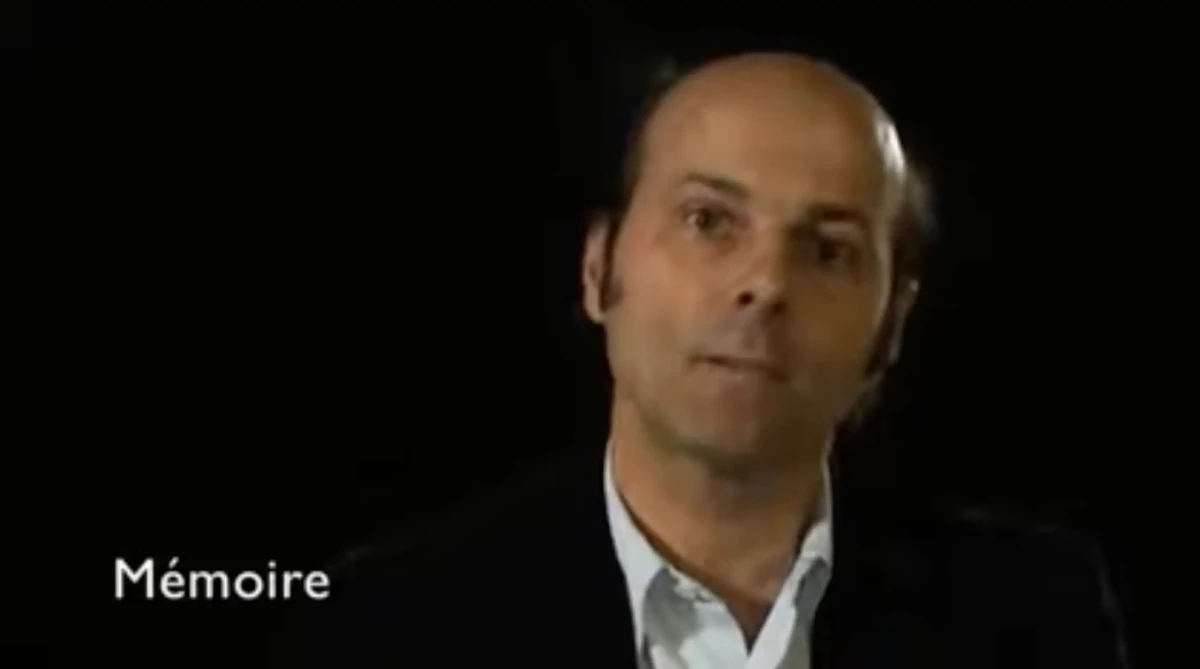
Architectures of war
Partners :
Groupement d'intérêt scientifique Patrimoines militaires : Architectures, aménagements, techniques et sociétés https://patmilitaire.hypotheses.org
European Federation of Fortified Sites https://www.efforts-europe.eu
Réseau des Sites Majeurs Vauban (RSMV) Association Herpétologique de Provence Alpes Méditerranée (AHPAM)
Memory and creation
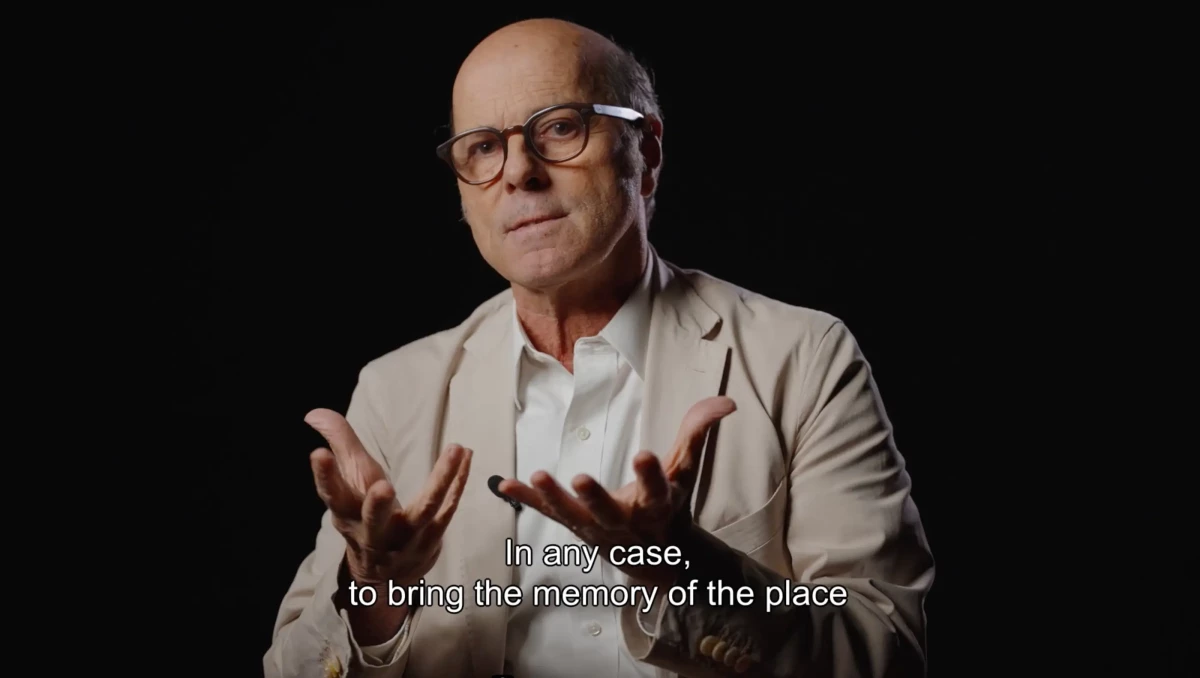
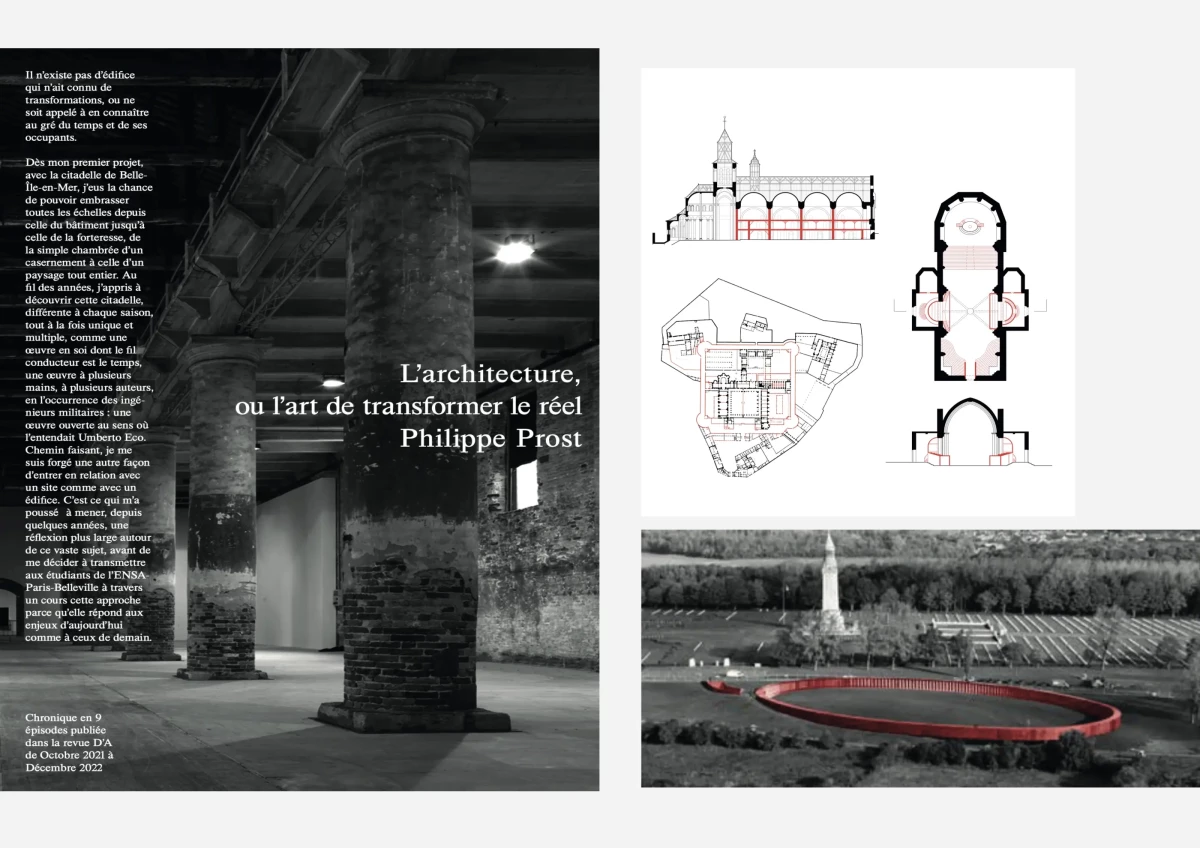
The environmental challenges of the third millennium have brought issues related to heritage refurbishment to the fore. The studio conducts research on methodological tools that can be tailored to different ways of performing the art of transformation. Whether working within a listed monument such as the Hôtel de la Monnaie – where we needed to operate within the original work without diminishing it – or contemplating the future of an everyday building type like miners' housing, there is no creative act that doesn’t involve historical memory. Even a wholly original creation such as the Ring of Memory at the International Memorial of Notre-Dame-de-Lorette, whose abstract form conjures mental images of the Great War, carries within it a fundamental question: why?
Partners :
ENSA Paris Belleville, laboratoire IPRAUS
Cité de l’architecture et du patrimoine
Association of critical heritage studies (ACHS)
The International Committee for the Conservation of the Industrial Heritage (TICCIH)
Centre d'études et d'expertise sur les risques, l'environnement, la mobilité et l'aménagement (CEREMA)
Place and heritage
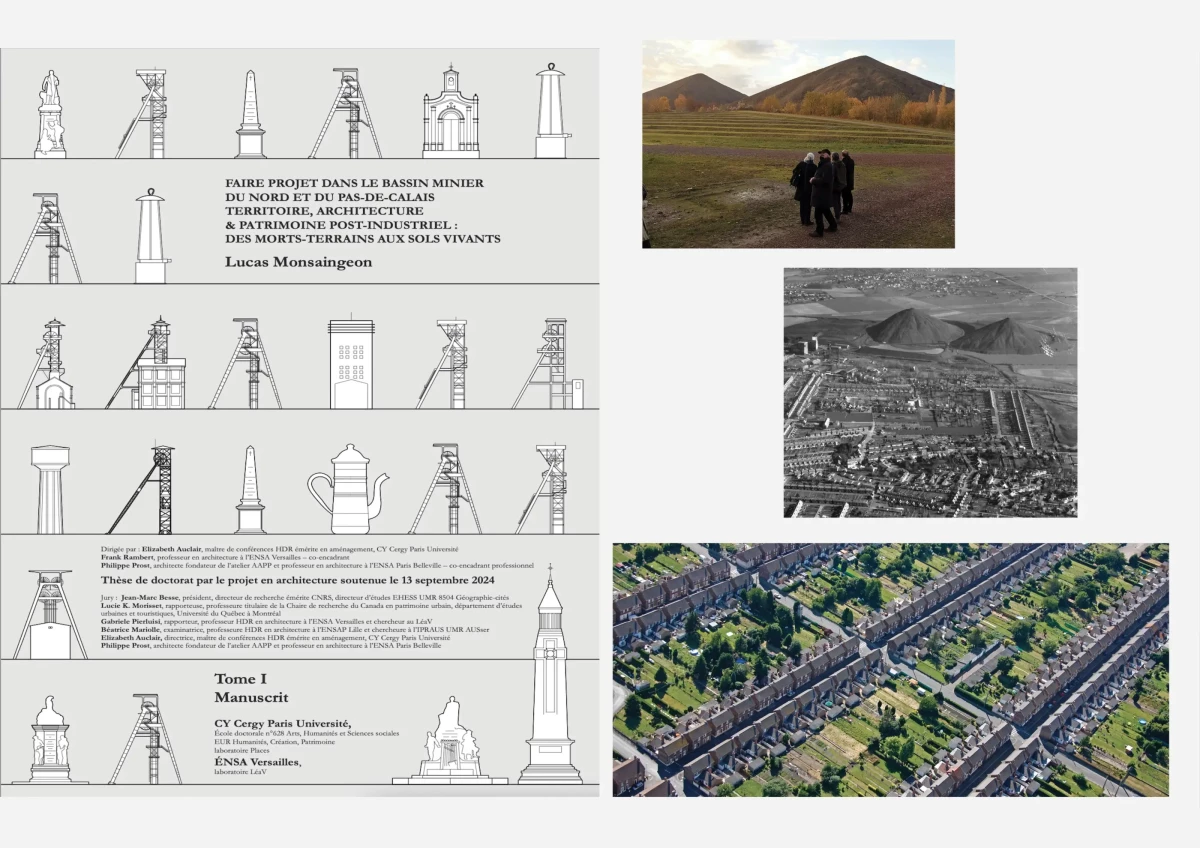
As demonstrated by the 2012 inscription of the Nord-Pas-de-Calais Mining Basin on the UNESCO World Heritage List as a “living and evolving cultural landscape,” the local scale requires comprehensive, locally grounded, and cross-disciplinary techniques where heritage and place join forces on a shared path towards the transition. The studio contributed to this in various ways, including a prospective study of housing in the mining settlements. Another example is in Saint-Omer, where the studio developed the conservation and enhancement plan for its Remarkable Heritage Site to transform the town's local heritage into a catalyst for new practices and uses.
Partners :
Chaire partenariale « Bassin Minier : Acclimater
les territoires post-minier » ENSAP Lille
Université d’Angers
Université Paris-Cité, UMR Géographie-Cités
Université d’Avignon
Caisse des dépôts – mécénat à la recherche en architecture et paysage
Materials and innovation
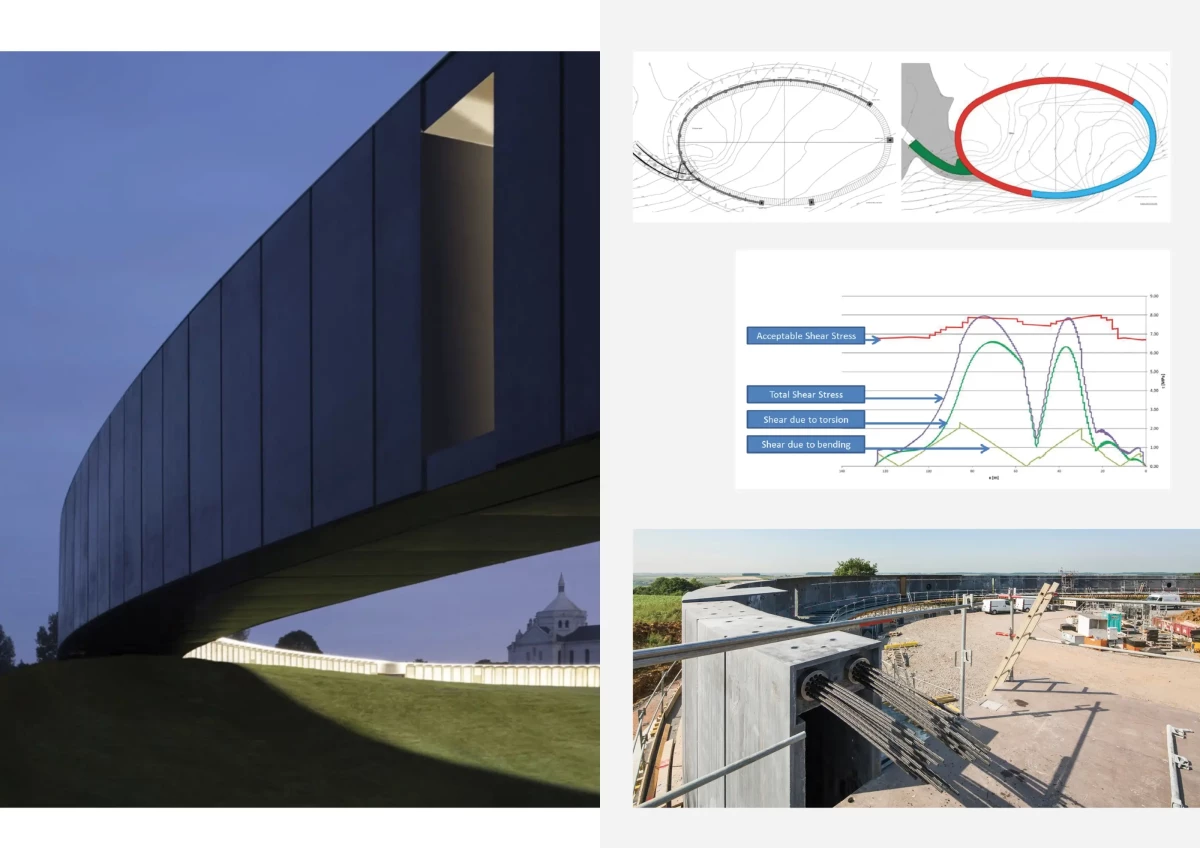
Working on materials involves two lines of thinking: on the one hand, the intersection of engineering and architecture, with materials that represent innovative technical systems and transform a built work into a genuine area of research. This principle led us to select Ultra High-Performance Fibre-Reinforced Concrete, then a novel material, for the construction of the Ring of Memory. On the other hand, materials also involve using local resources, traditional skills, and organically sourced materials. This includes the recycled-cotton thermal and acoustic insulation we installed at the Cité des Électriciens, or the hemp concrete we used at the Hôtel de Fourcy. This line of thinking extends in many directions in the pursuit of economy of means and materials that promote ecological responsibility.
Partners :
Centre technique des matériaux naturels de construction (CTMNC)
Centre de ressources pour la réhabilitation responsable du bâti ancien (CREBA) C&E ingénierie
Elxir
Aslé conseil
Publications
Philippe Prost, Mont-Dauphin, une place forte au coeur des Alpes, Éditions du Patrimoine, Centre des monuments nationaux, 2022.
Lucas Monsaingeon, « Les cas d’étude des citadelles de Lille et d’Ajaccio : pour une approche diachronique des sites fortifiés », in Châteaux et cités fortifiés: les apports des nouvelles connaissances à la notion d’authenticité, Villemur-sur-Tarn, Loubatières, 2021.
Philippe Prost, Par art et par nature: architectures de guerre, Paris, les Édifiantes, 2019.
Philippe Prost, Vauban: le style de l’intelligence, Paris, Archibooks, 2008.
Philippe Prost, Les forteresses de l’Empire: fortifications, villes de guerre et arsenaux napoléoniens, Paris, Editions du Moniteur, 1991.
Philippe Prost, Rocca d’Anfo: la forteresse inachevée, 1987.
Philippe Prost, « Défendre le tryptique : recherche, enseignement, pratique », Architecture située, 2024, p. 232‑241.
Philippe Prost, « L’architecture ou l’art de transformer le réel », Les cahiers de la Pierre d’Angle, 1, 2019.
Philippe Prost, Pas de création sans mémoire, Paris, Éditions Cité de l’architecture et du patrimoine-École de Chaillot, 2016.
Philippe Prost, « La Cité des électriciens, un projet pilote pour des enjeux régionaux », in Comité d’information et de liaison pour l’archéologie, l’étude et la mise en valeur du patrimoine industriel (dir.), Le patrimoine industriel au XXIe siècle, nouveaux défis. Actes du congrès TICCIH Lille Région 2015, 2018, p. 91‑95.
Philippe Prost, Aitor Ortiz et Yves Le Maner, Mémorial international de Notre-Dame-de-Lorette, Paris, les Édifiantes éditions, 2014.
Philippe Prost et Jean-Pierre Serna, « Vers un urbanisme patrimonial », in Mathieu Gigot (dir.), La ville sous cloche ? Zero artificialisation nette, densification et patrimoines culturels, Paris, éditions l’Harmattan, 2025, p. 185‑222.
Lucas Monsaingeon, « Faire projet dans le bassin minier du Nord et du Pas-de-Calais. Territoire, architecture & patrimoine post-industriel : des morts-terrains aux sols vivants » Thèse de doctorat, CY Cergy Paris Université, ENSA Versailles, 2024.
Lucas Monsaingeon, « The UNESCO evolving and living heritage of the Nord-Pas de Calais Mining Basin: Postindustrial landscape heritagization as a territorial healing process », in Giacomo Pettenati (dir.), Landscape as heritage: international critical perspectives, Abingdon, Oxon ; New York, NY, Routledge, 2022
Philippe Prost et Lucas Monsaingeon, « Le Bassin minier du Nord-Pas-de-Calais, un patrimoine évolutif et vivant. Entre conservation et évolution, enjeux et nouveau paradigme pour les projets d’architecture », Les Cahiers de la recherche architecturale urbaine et paysagère, 7, 2020. https://doi.org/10.4000/craup.3786
Philippe Prost et Gaël Lesterlin, « La restauration de l’hôtel Richer de Belleval », in L’hôtel Richer de Belleval à Montpellier. Histoire, restauration et création, Toulouse, Direction régionale des affaires culturelles Occitanie, 2021, p.
Lucas Monsaingeon, « Le béton armé au service de l’exploitation minière. Exemple avec la reconstruction en 1920 du chevalement de la fosse n° 2 de Flines. », La Première Reconstruction dans les Hauts-de-France (1919-1939)-HS 70, 2020.
Philippe Prost, Lucas Monsaingeon, Jean-Marc Weill et Raphaël Fabbri, « Memorial of Notre-Dame-de-Lorette », Reinforced Concrete, Symposium on Ultra-High-Performance Fibre-Reinforced Concrete, UHPFRC 2017, 2017.
Our network
ENSA Paris Belleville, laboratoire IPRAUS
ENSA Versailles, laboratoire LéaV
ENSAP Lille, Chaire partenariale « Bassin Minier : Acclimater
les territoires post-minier »Université d’Angers
CY Cergy Paris Université, laboratoire Places
Université Paris-Cité, UMR Géographie-Cités
Université d’Avignon
Université de Galatasaray, Istanbul
École Pratique des Hautes Études (EPHE)
Cité de l’architecture et du patrimoine
Heritopolis, UN-Habitat
Réseau des Sites Majeurs Vauban (RSMV)
European Federation of Fortified Sites (EFFORT)
Groupement d’intérêt scientifique Patrimoines militaires
Mission Bassin Minier (MBM)
Association of critical heritage studies (ACHS)
The International Committee for the Conservation of the Industrial Heritage (TICCIH)
Comité d’information et de liaison pour l’archéologie, l’étude et la mise en valeur du patrimoine
industriel (CILAC)La Fabrique des Transitions
Caisse des dépôts – mécénat à la recherche en architecture et paysage
D’A
Les Édifiantes
Les Cahiers de la recherche architecturale, urbaine et paysagère (CRAUP)
Métis Presses
Routledge
Éditions du patrimoine - CMN
Laboratoire de Recherche des Monuments Historiques (LRMH)
Aslé conseil
Centre technique des matériaux naturels de construction (CTMNC)
Centre de ressources pour la réhabilitation responsable du bâti ancien (CREBA)
Association Herpétologique de Provence Alpes Méditerranée (AHPAM)
Elxir
Inex
C&E