Butrint National Park
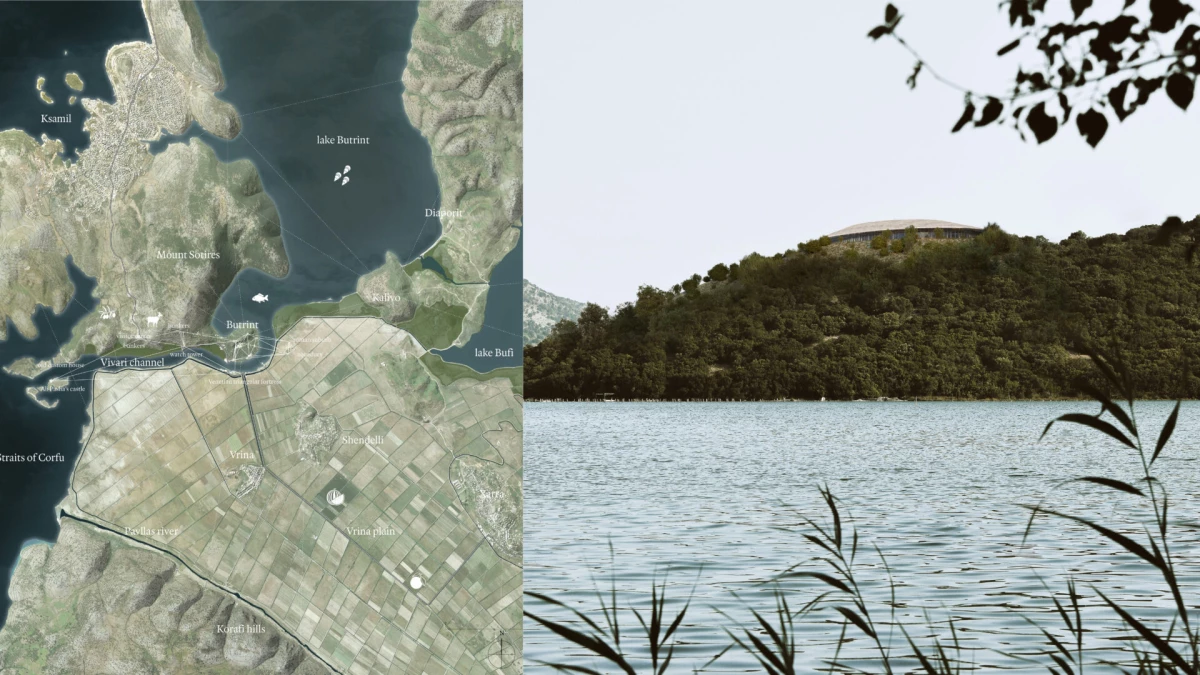
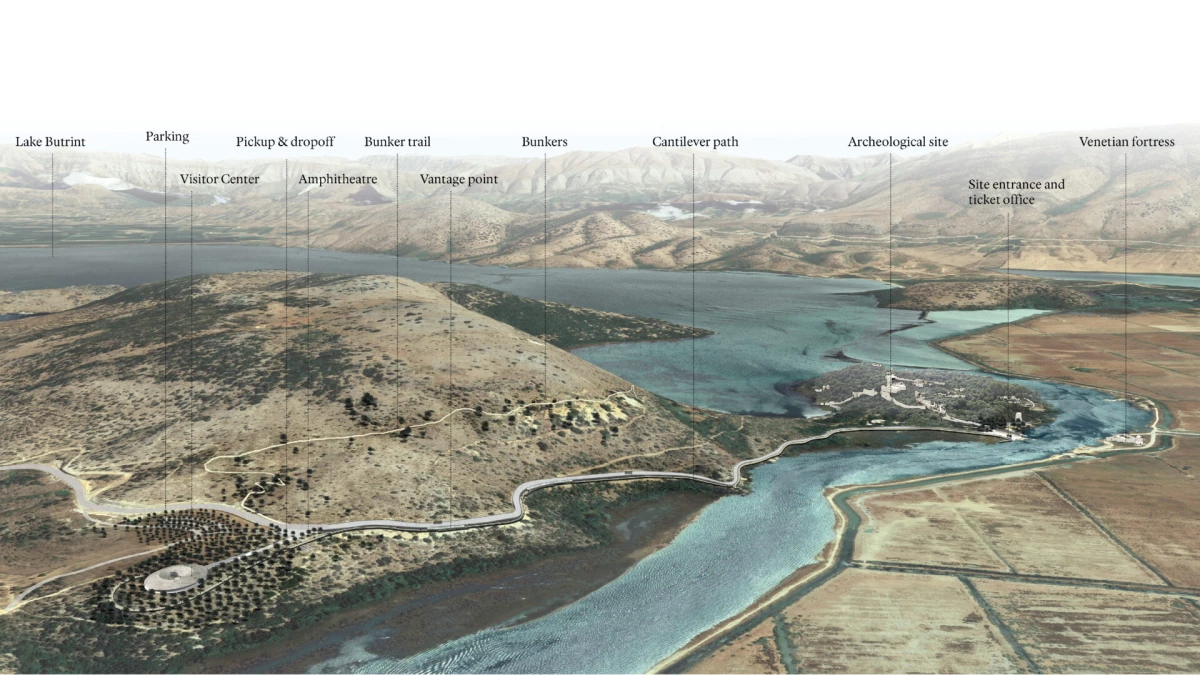
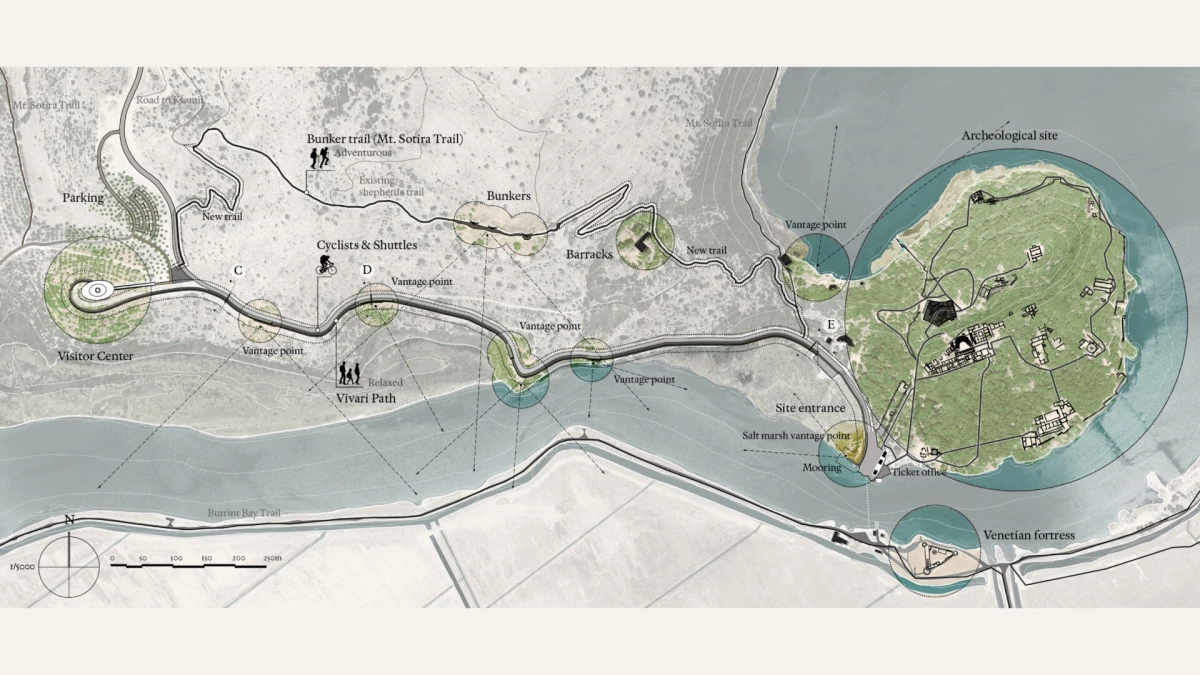
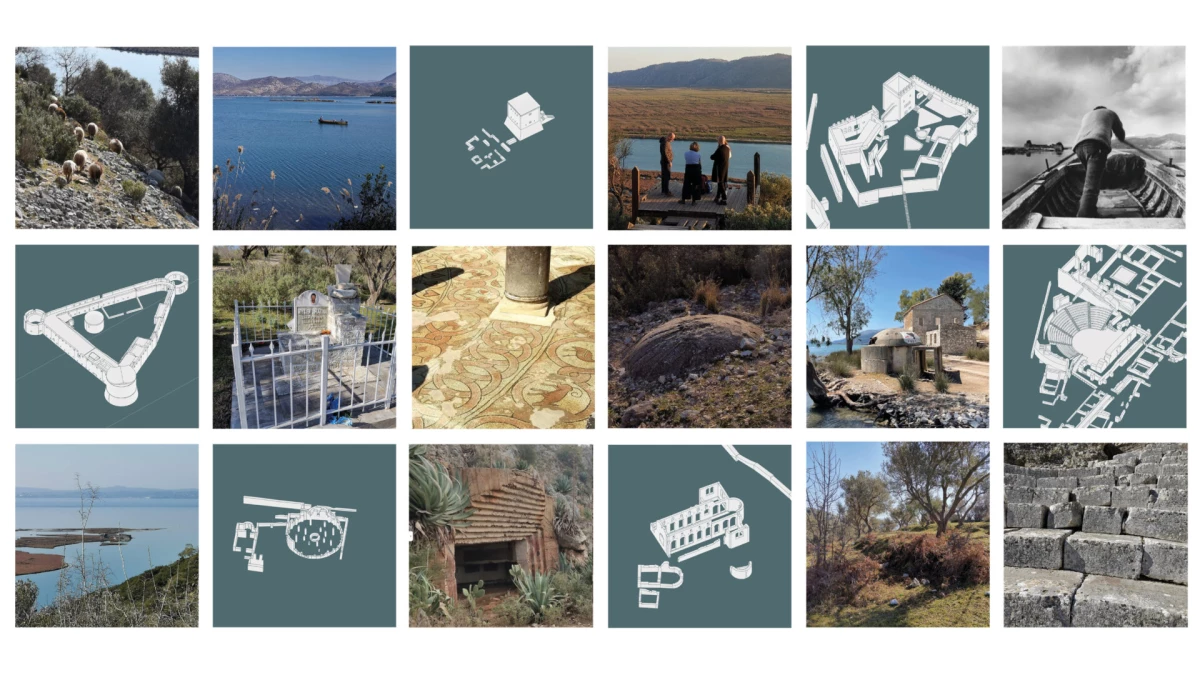
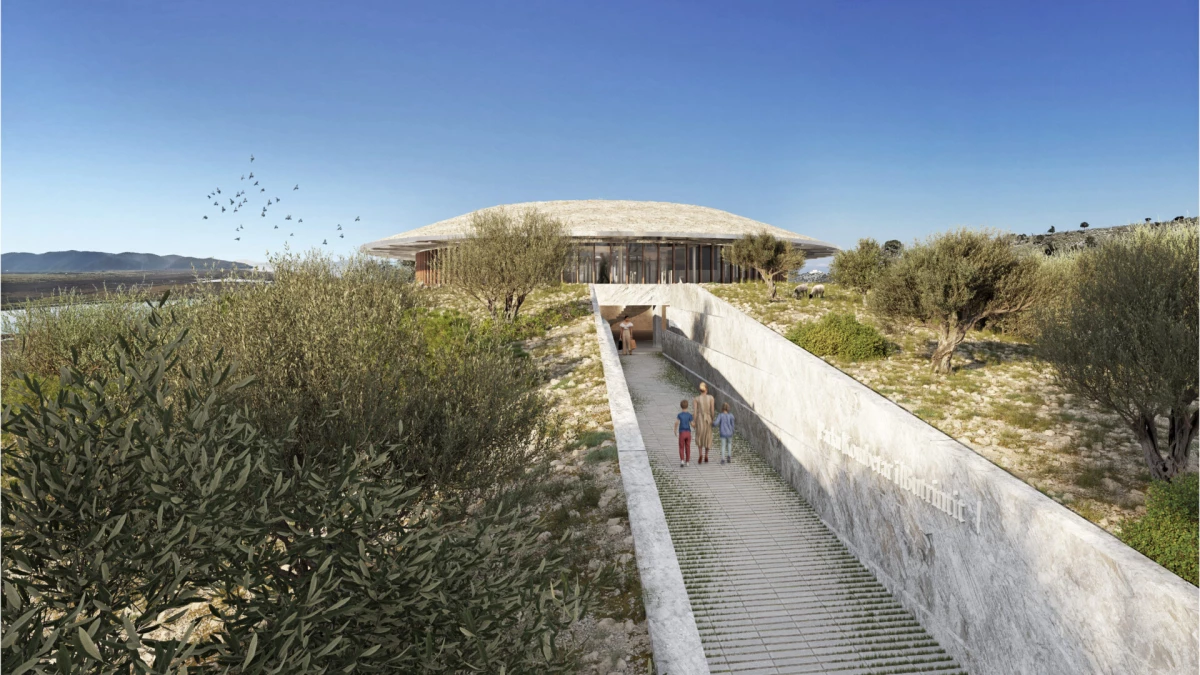
The master plan and future visitor centre were designed as a gateway to the Butrint area and the park's well-preserved local environment. The idea was to involve local communities and get visitors actively engaged in exploring the area, move away from mass tourism and allow people to take their time as they learn about this microcosm of Mediterranean history. Visitors would be able to indulge their curiosity and explore this Homeric landscape on foot, by bicycle, or by boat as they moved through a place rich with historical memory.
Lucas Monsaingeon, Project director
Léa Malga, Project assistant
William Van Andringa, Archaelogist
Terrel Group, Structure Engineering Firm
Eco+construire, Economist
CL Design, Signage
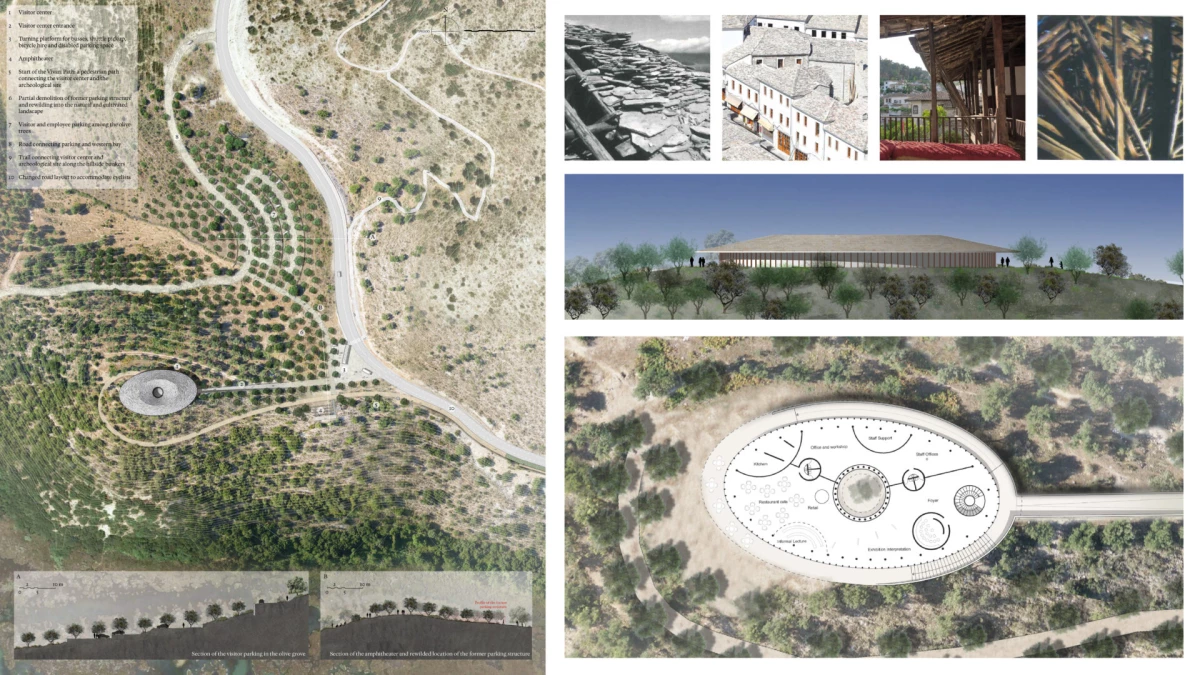
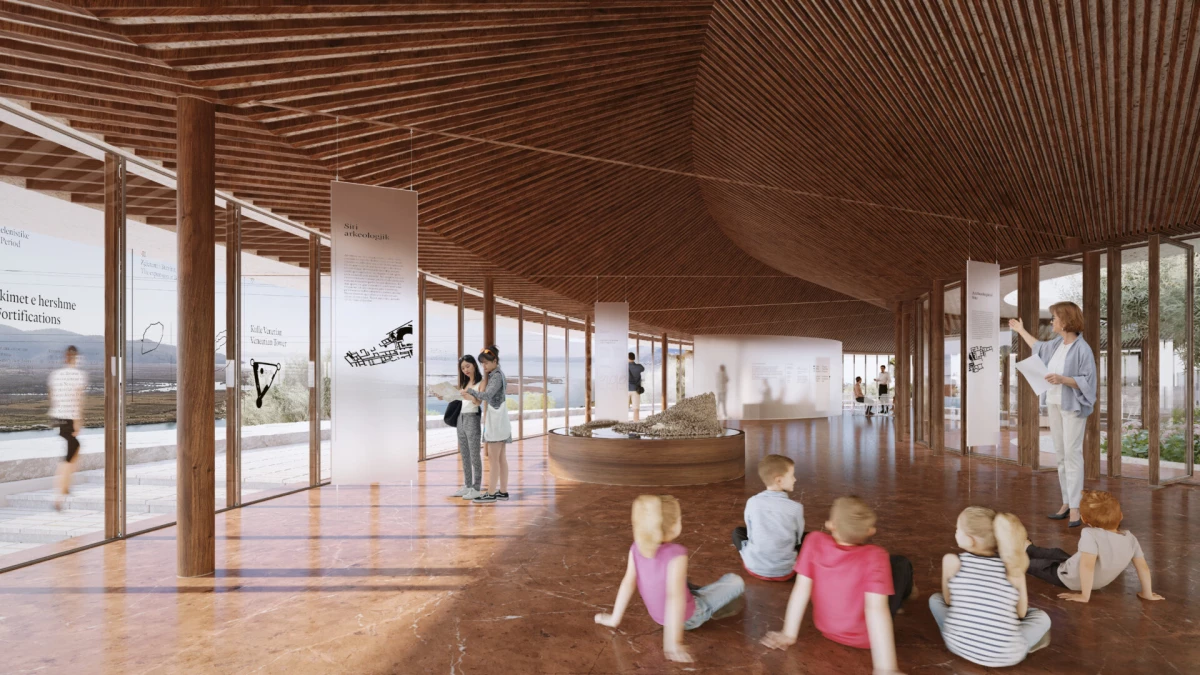
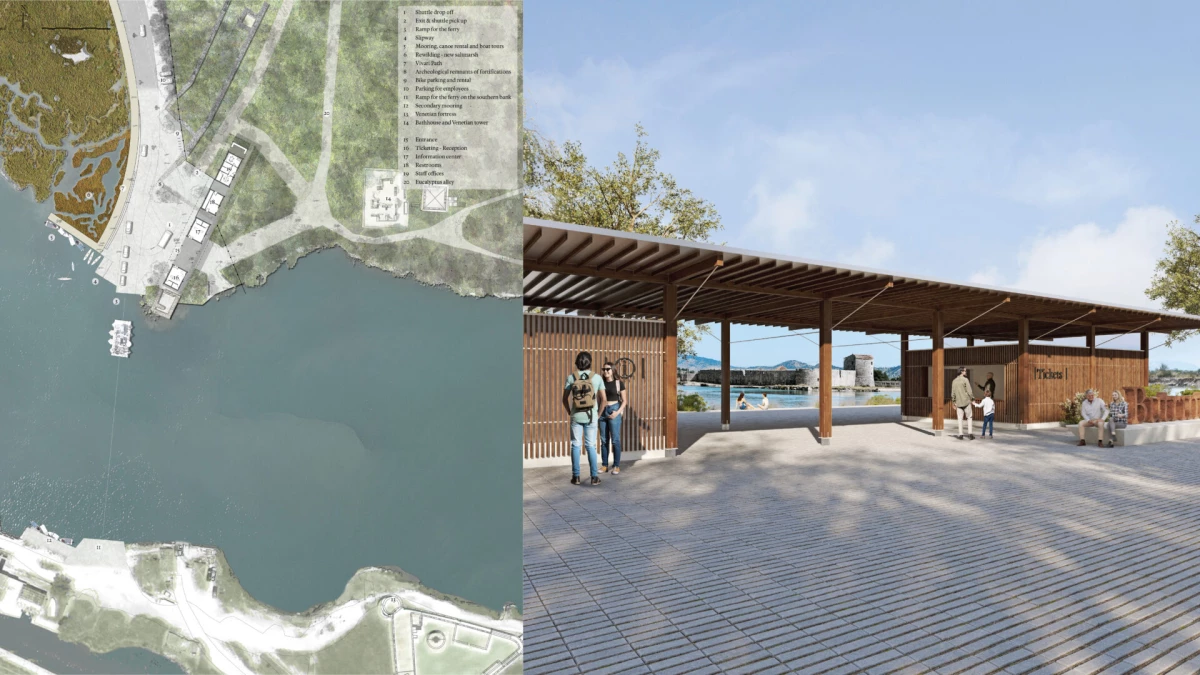
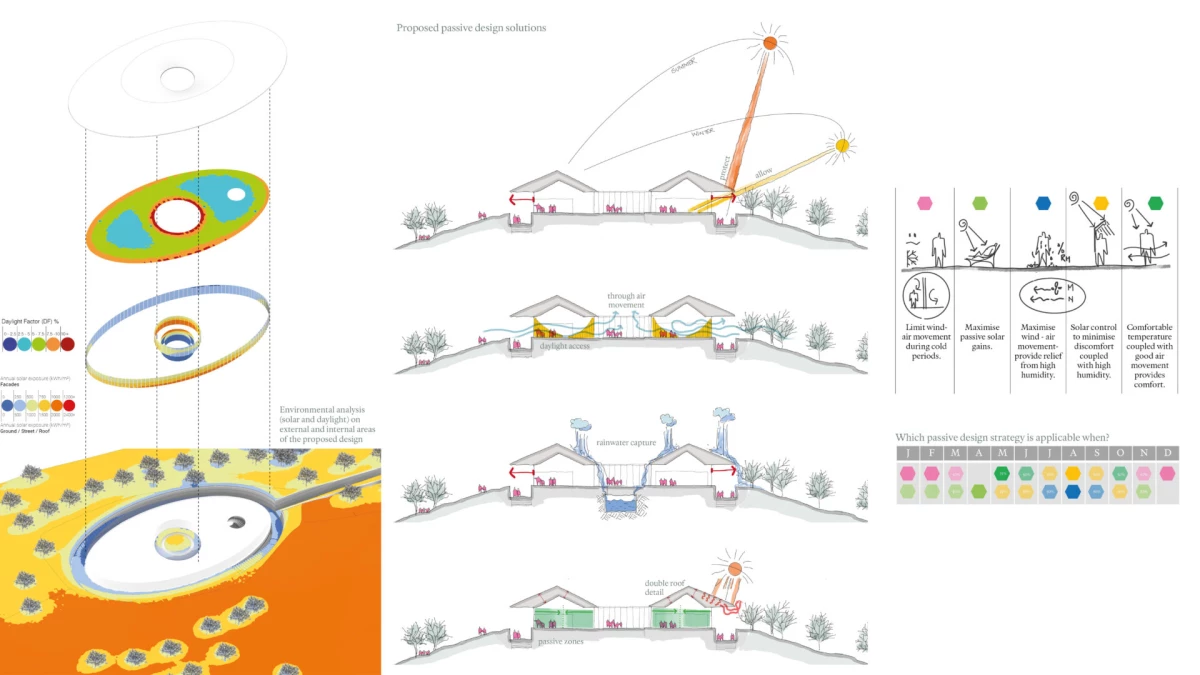
The proposal aimed to reinforce the spirit of the place as described by Richard Hodges. This first meant focusing on its architectural design and how it sits within the landscape, introducing new traditional, organic materials, natural ventilation, and bioclimatic techniques. It involved working with the terrain to hollow out and extends some of the hills, creating panoramic views. Re-naturalising and restoring the terraced olive groves would allow visitors to discover old shepherds' paths through the hills. The buildings themselves were designed as tools for interpreting the site. The new visitor centre would serve as a landmark in the landscape and as a reference point for visitors to geographically orientate themselves and understand the site's topography. A timeline on the curved glass façade would be overlaid on the panorama convey the site's long, layered history as the product of continuous change. The new entrance to the archaeological site would extend and reveal traces of the western defensive wall, which was partly buried beneath the existing platform. The result would be a simple, durable design that meets current ecological standards by sensitively using local resources and bioclimatic architecture in tune with its surroundings. Since the site sits within a protected natural area, it was essential that the visitor centre set an example for genuinely sustainable design that respects nature.