Community Hall of the City of Bourges
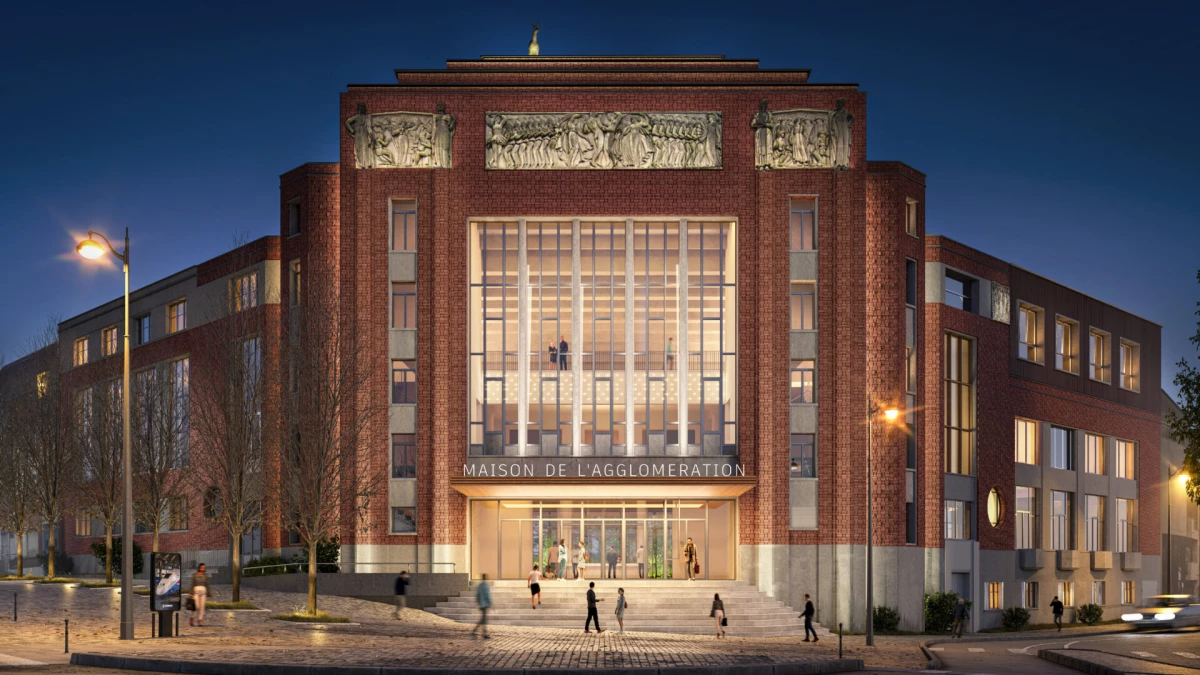
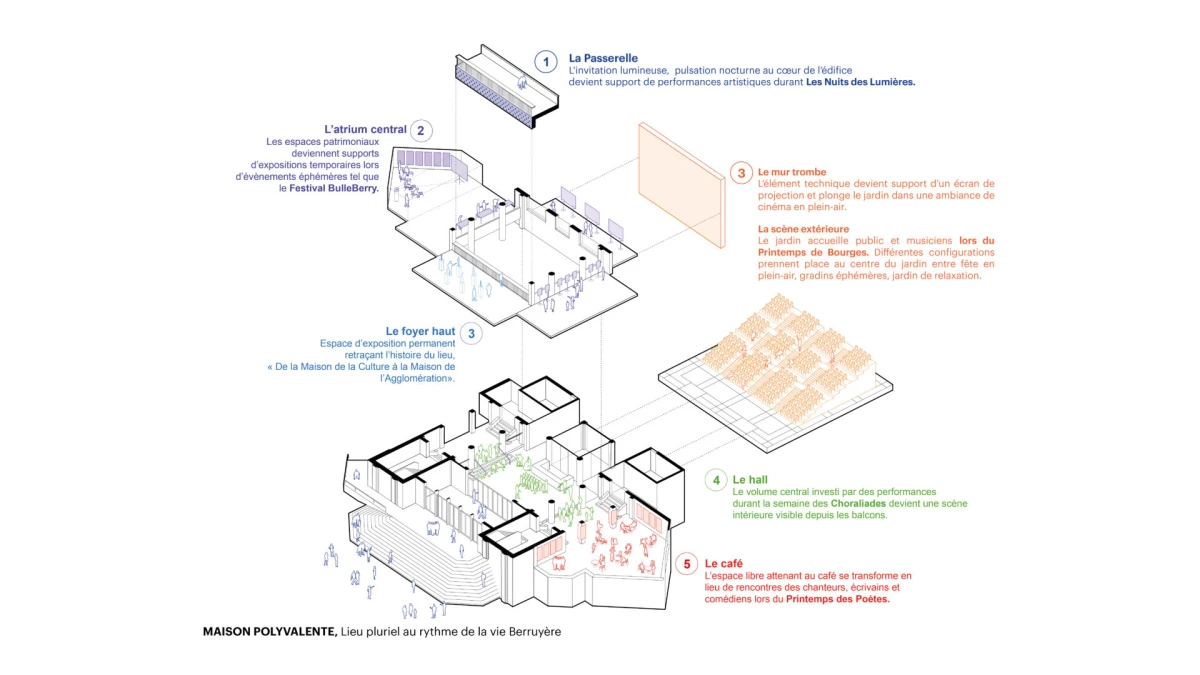
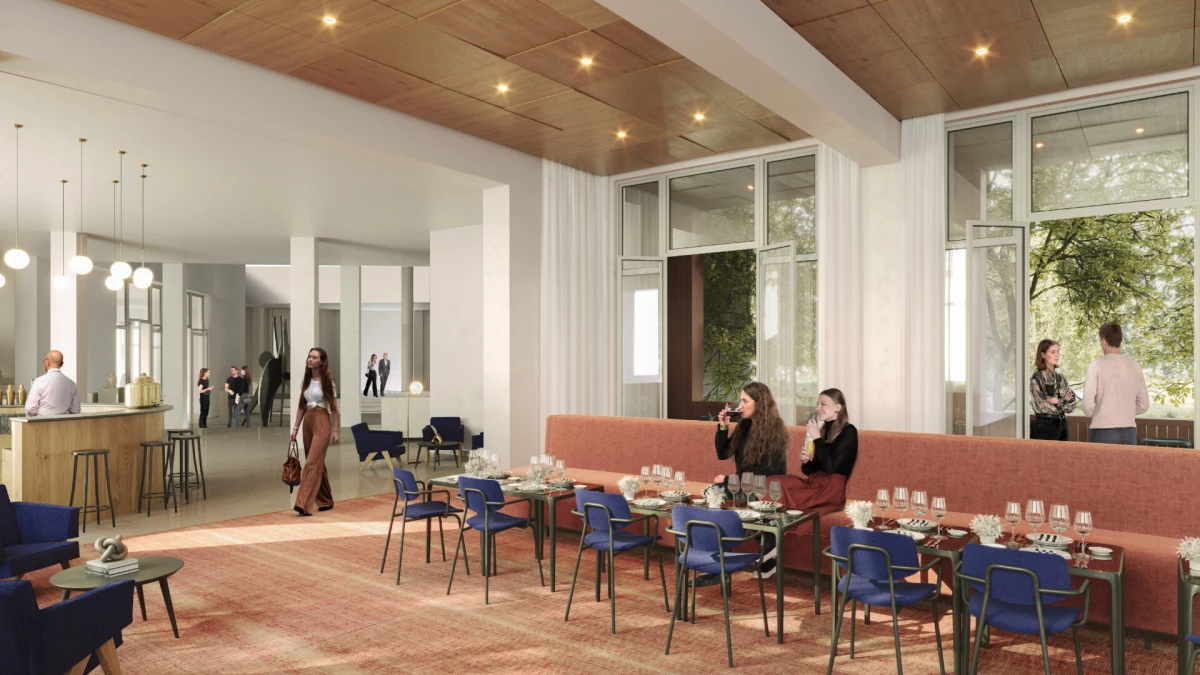
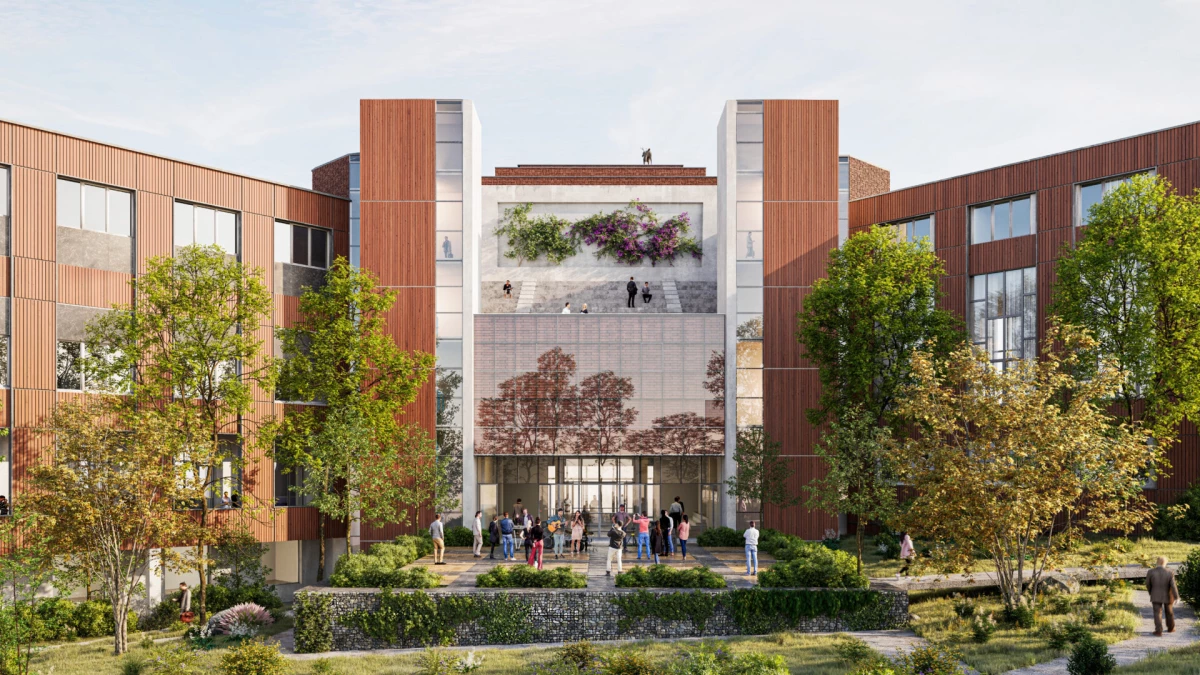
The former House of Culture in Bourges was set to become the new Maison de l'Agglomération (regional community hall). The site has a special place in local history and shaped the lives of Bourges residents and their city for generations. Starting with the Palmarium de Séraucourt, built at the edge of the historic centre in the late 19th century, to the “first” House of Culture in Bourges, which was inaugurated by André Malraux in 1964 and by Charles de Gaulle the following year, this part of the city has always been a place where residents come together. They have made it their own over the years and want to keep doing so.
Gaël Lesterlin, Project director
Léa Malga, Project assistant
Rocco Paoli, Project assistant
NOVAM, Structural Engineering, HQE (High Environmental Quality), MEP (Mechanical, Electrical, Plumbing), Site Infrastructure and Utilities
BMF, Economist
ARWYTEC, Kitchen Design and Engineering Firm
Gamba, Acoustics Engineering Consultancy
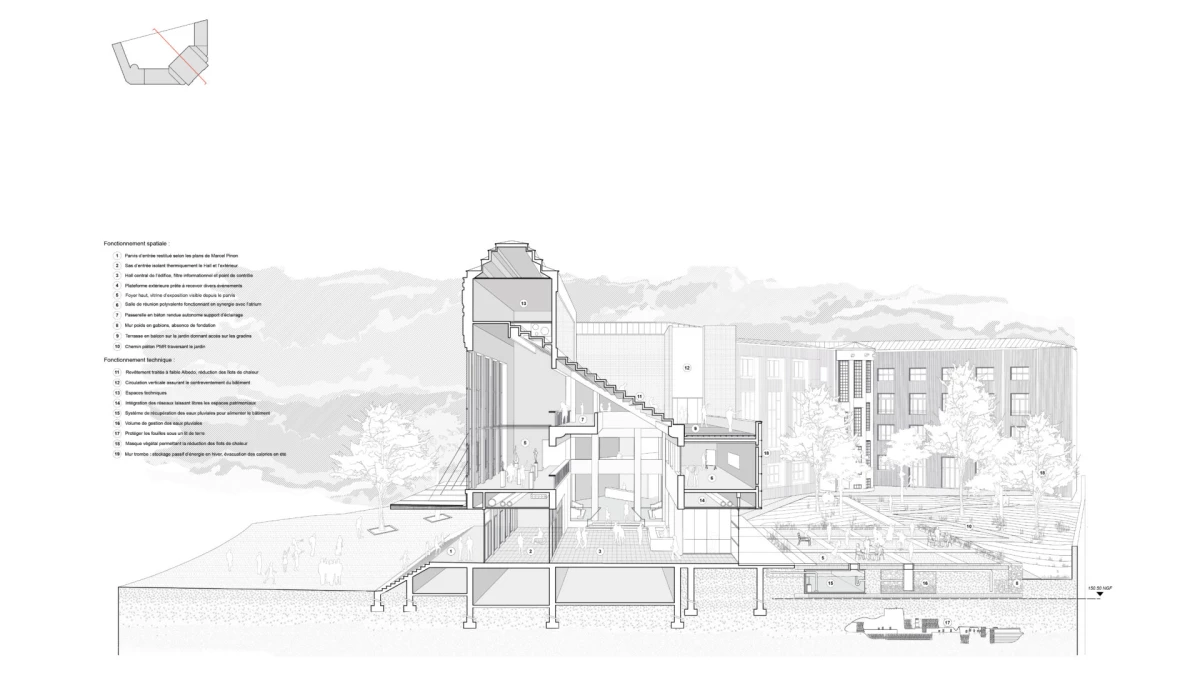
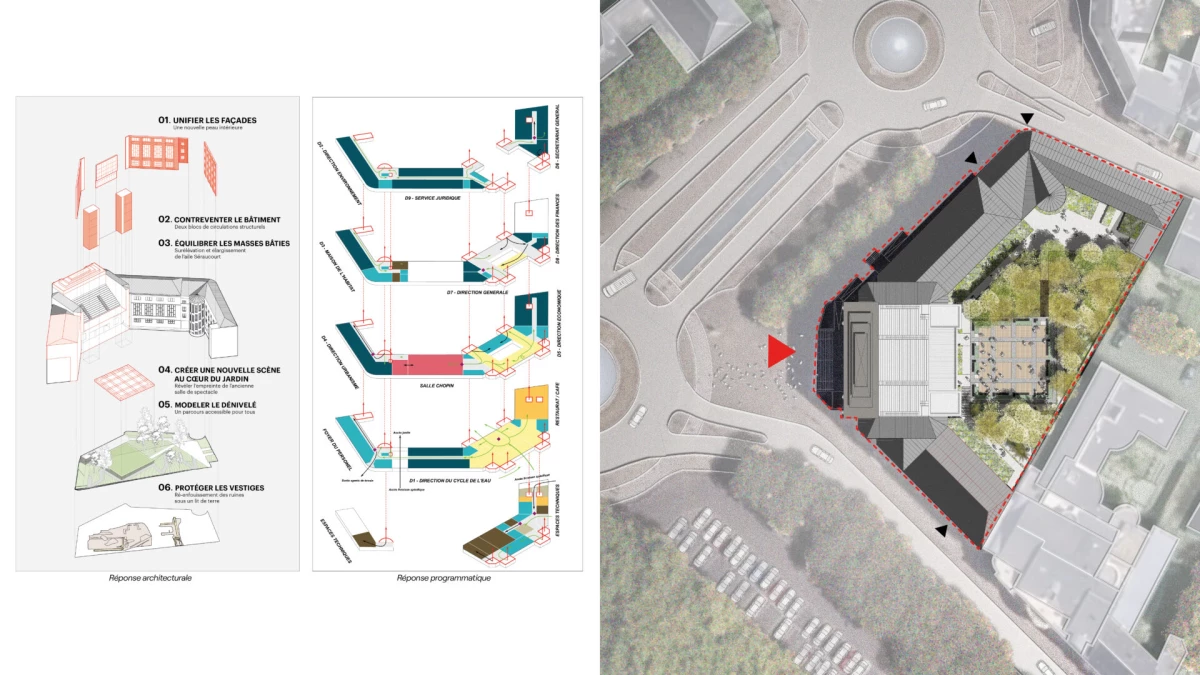
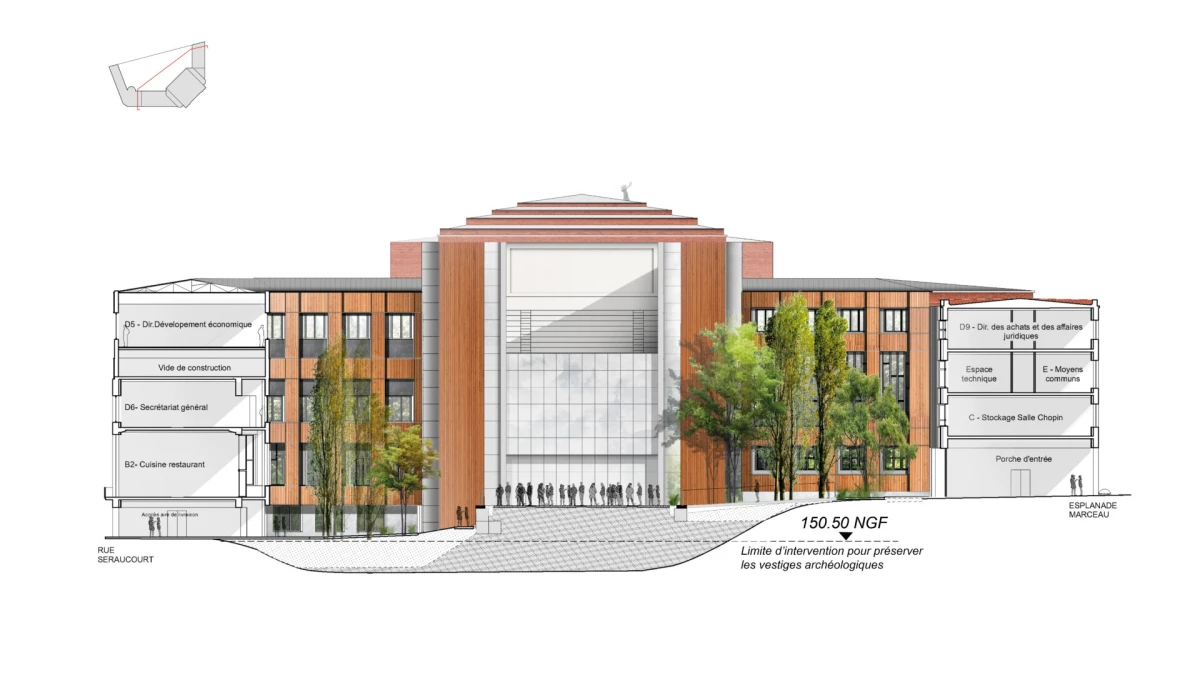
The task was to write a new chapter in the history of a landmark in French cultural policy, one shaped as much by its symbolic weight as by its remarkable architectural and archaeological features, which the new community centre needed to continue to embody. The goal was not to erase the past but rather to allow the site to regenerate itself. This building's history is one of continuous transformation: the 1930s-era structure, designed by architect Marcel Pinon, went through a series of reconfigurations and changes of use since renovation work resumed in 1961, including the addition of two performance halls, a cinema, and an updated restaurant. These changes indicate how well the Art Deco building managed to adapt to shifting needs while maintaining an identity that has become locally iconic. This otherwise successful period of continuous development came to an abrupt halt in the early 2010s, when an ongoing renovation project was interrupted by the discovery of Gallo-Roman archaeological remains. The building then sat frozen for ten years, its performance halls removed and its rear façade left with a gaping hole.