Port Vauban
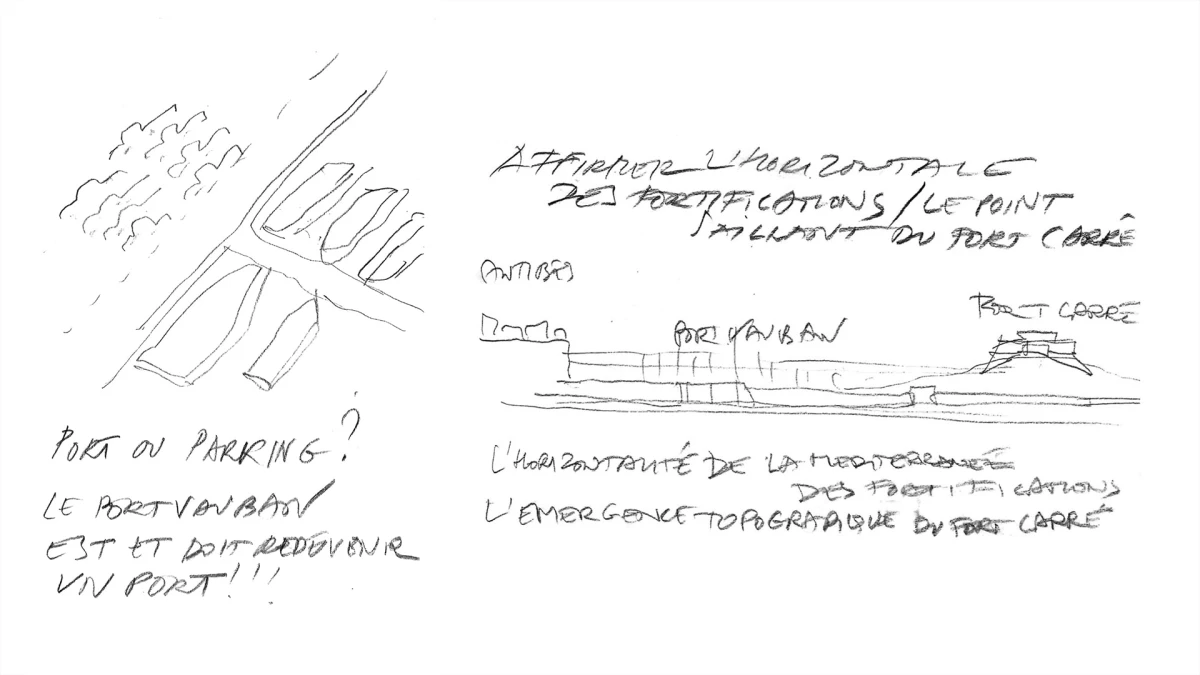
Geography shaped its history, and its history shaped its future. This premise guided how we redesigned Port Vauban in Antibes – the largest pleasure port in Europe, one shaped by successive layers of time. This newest layer needs to carry it forward into the third millennium without losing sight of the ties that bind it closely to the city.
Lucas Monsaingeon, Project director
Catherine Seyler, Artistic director
Sophie André, Interior design project manager
Guillaume Boubet, Public space project manager
Florent Reverdy, Project assistant
Baptiste Grandais, Project assistant
OGI, Civil engineering
B52, MEP engineering
C&E Ingénierie, Structural engineering
Tout se transforme, Landscape architect
Mazet et associés, Economist
Asselin, Heritage cost consultant
Intégral Ruedi Baur, Signage and wayfinding
Les Éclaireurs, Lighting design
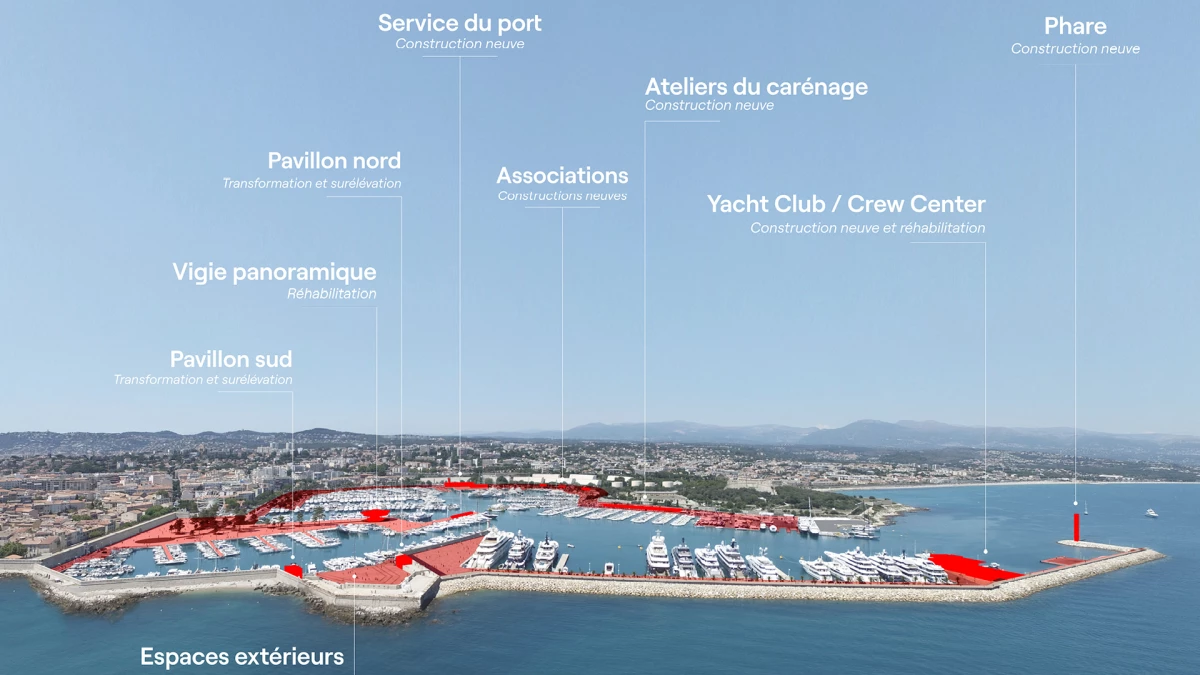
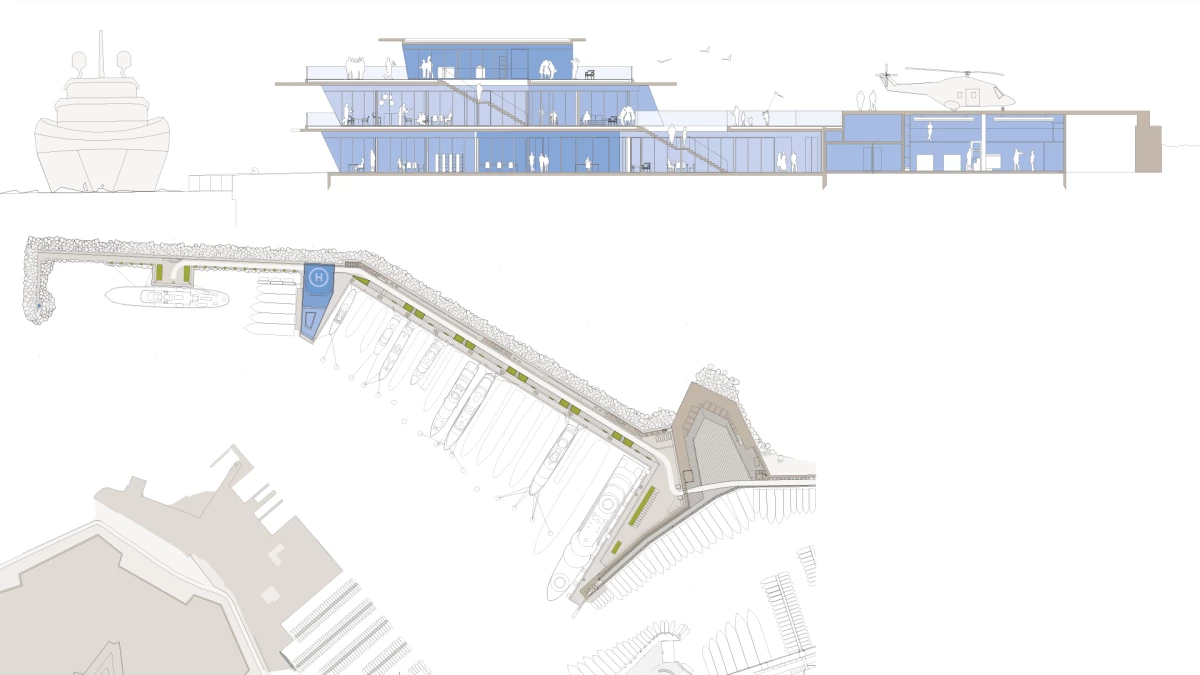
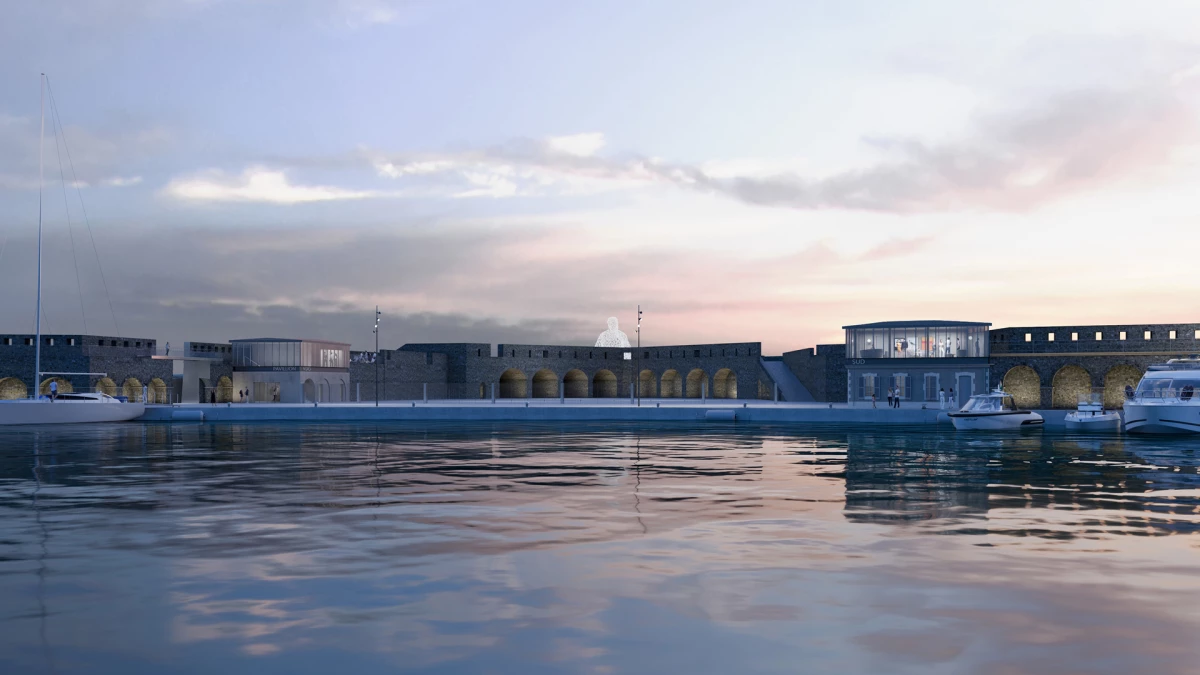
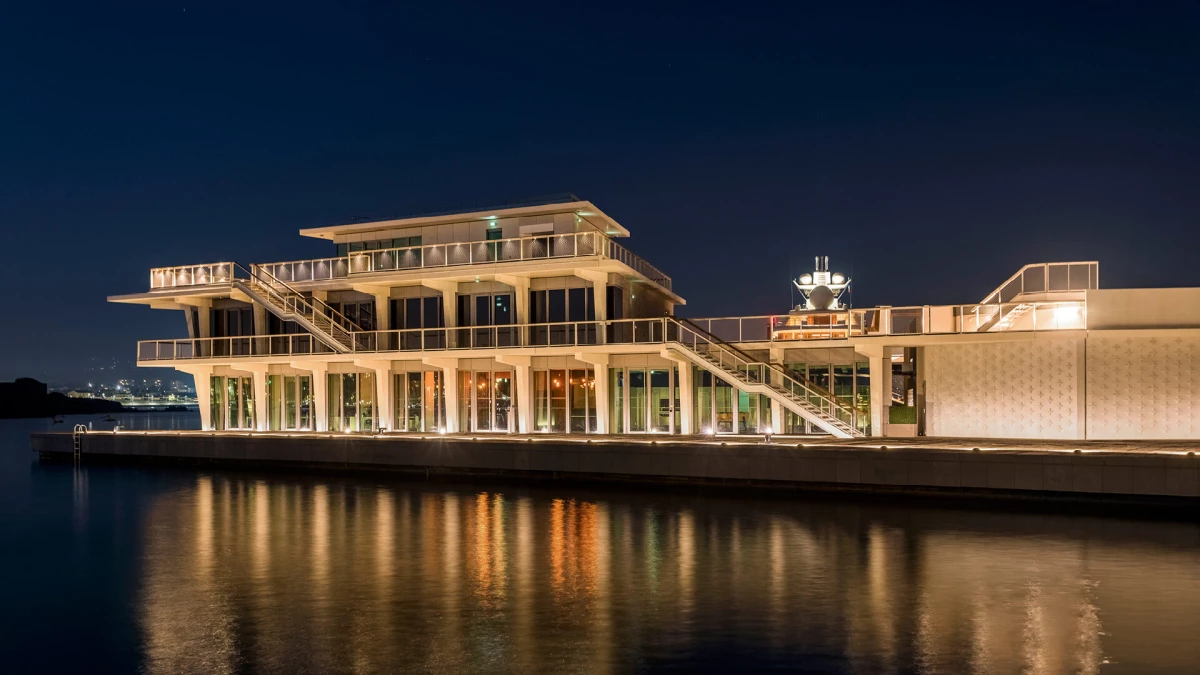
Construction of new port buildings and rehabilitation works
Construction of a new 600-space underground car park (3 levels)
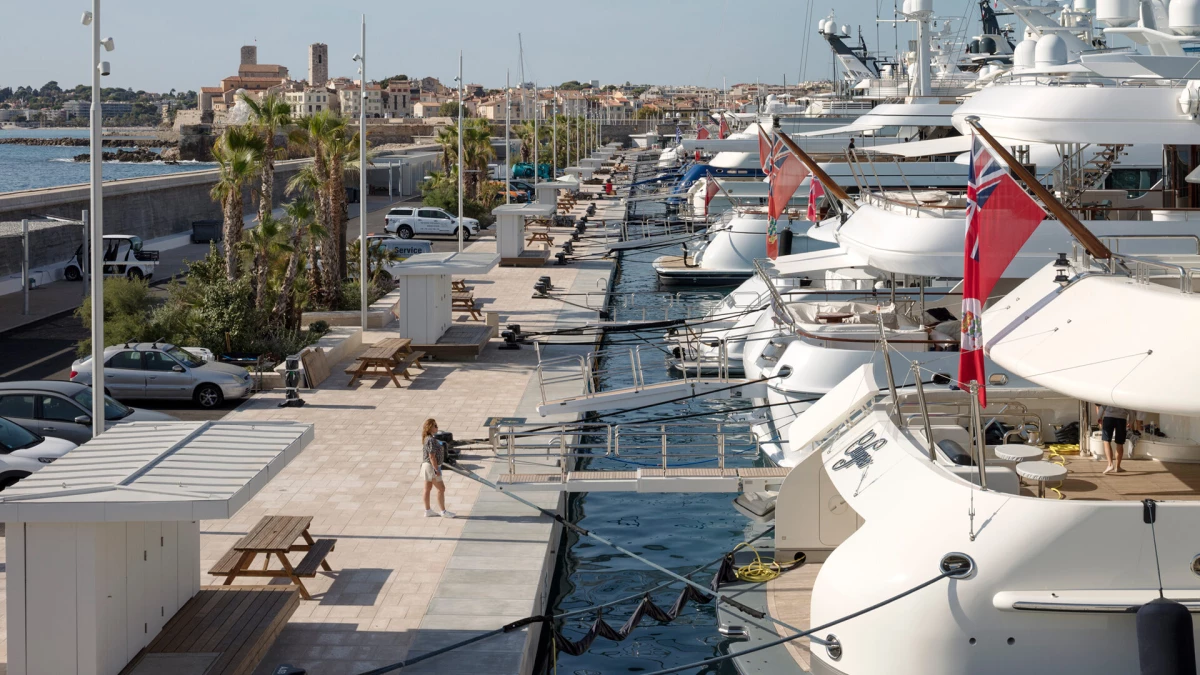
3,740 linear metres of quays
4,750 linear metres of pontoons
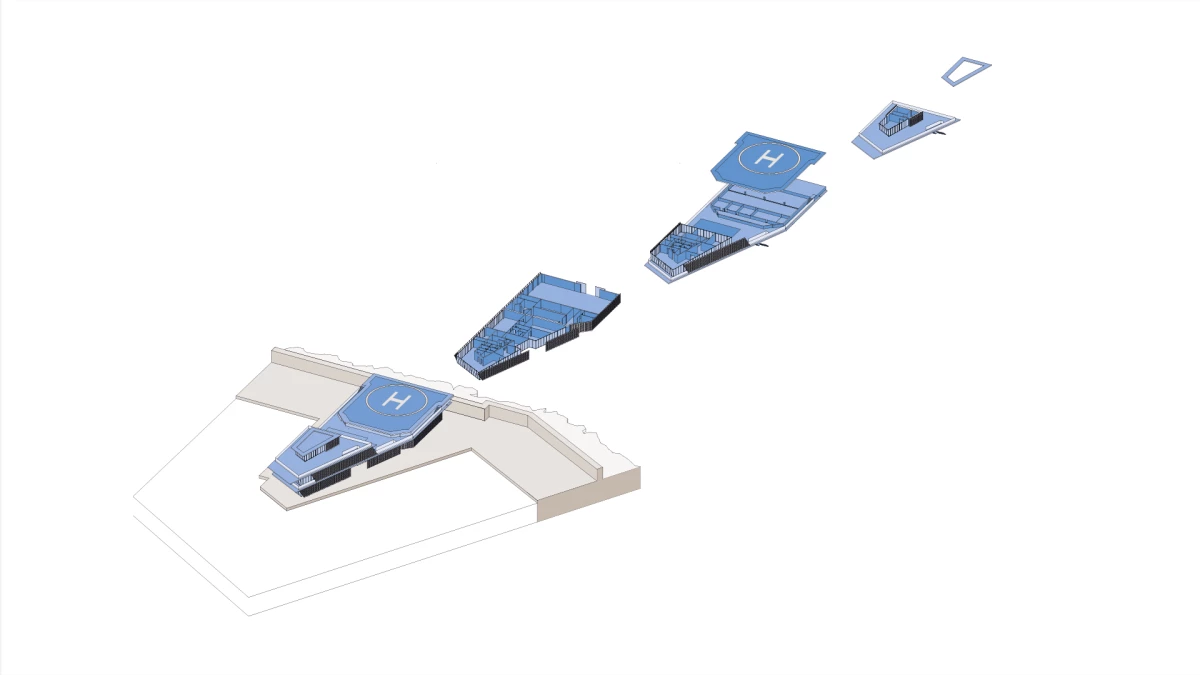
Building area (15 buildings): 5,480 sqm created, 800 sqm demolished
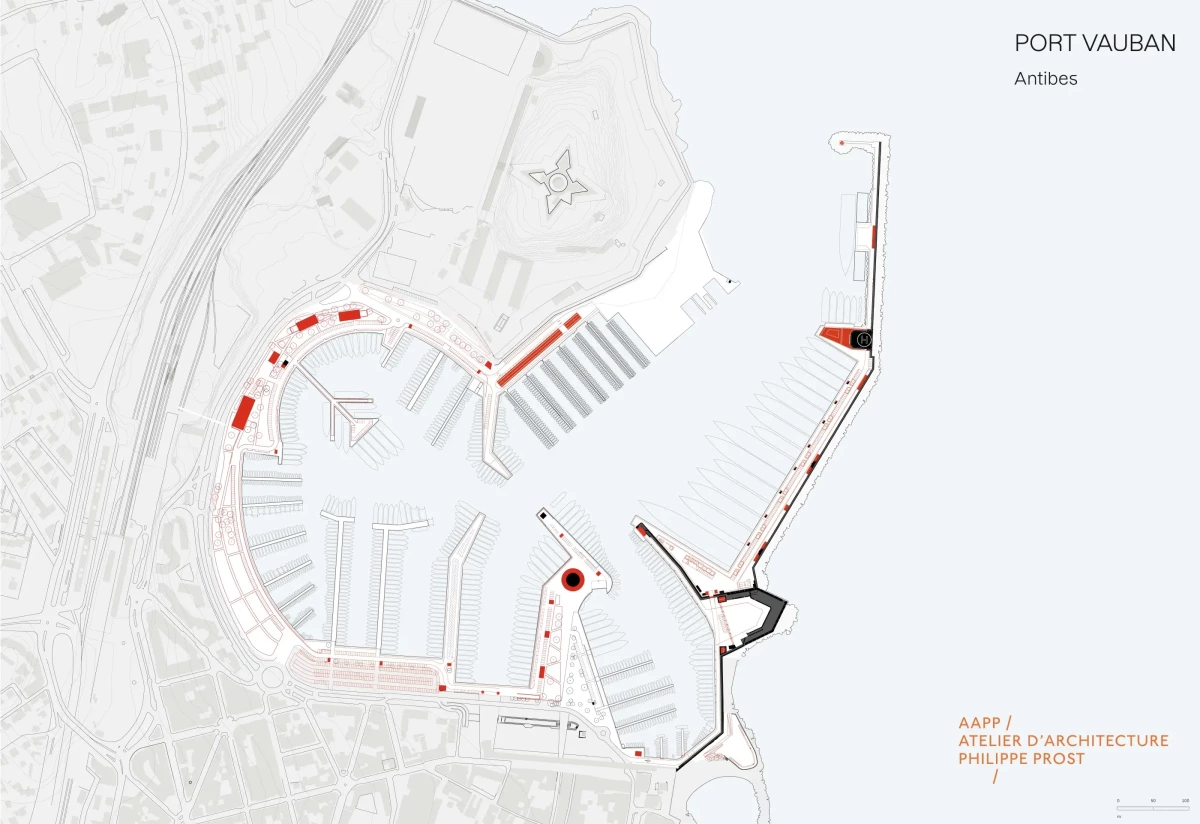
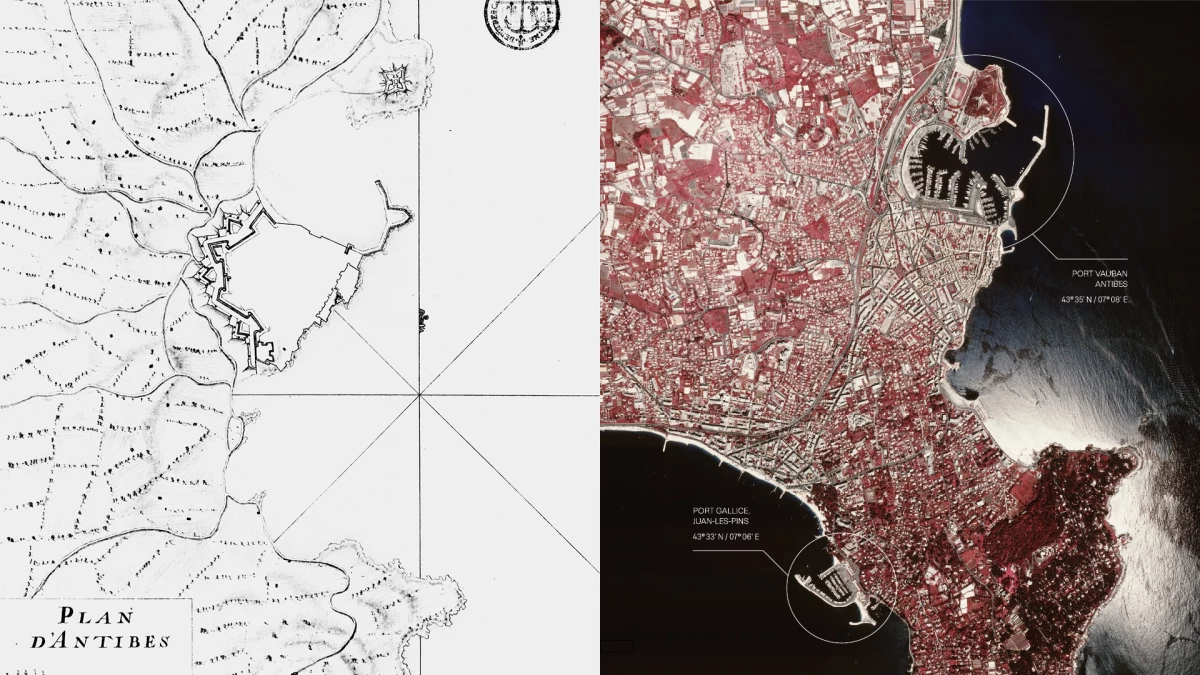
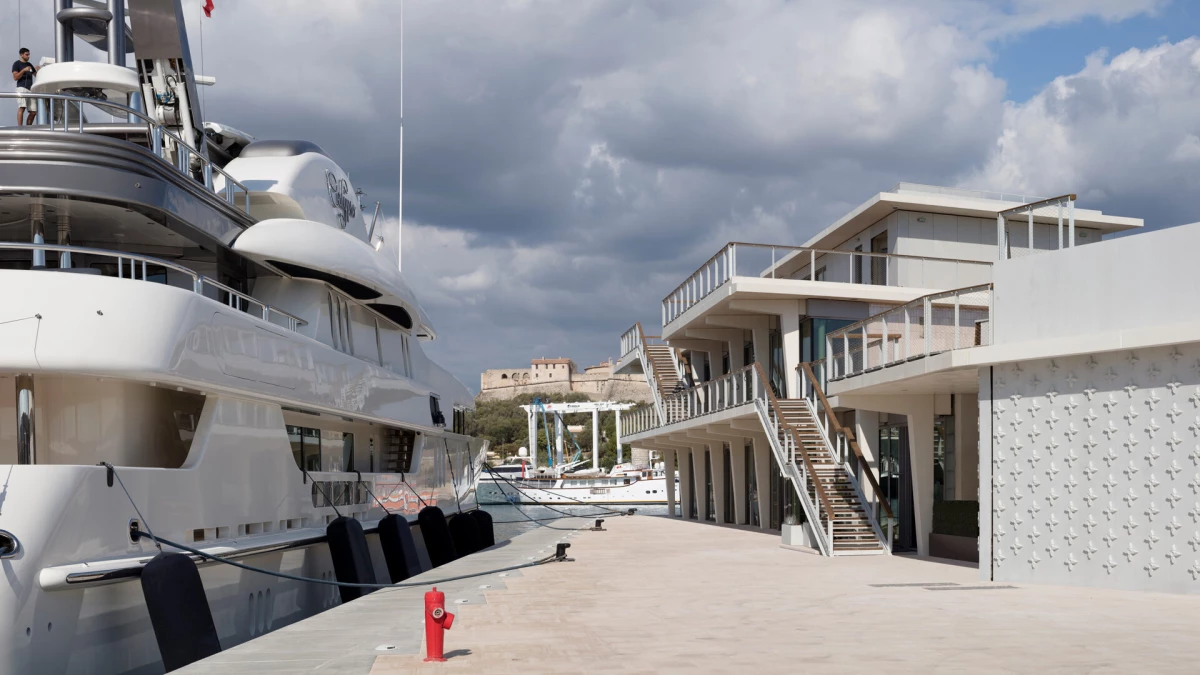
Port Vauban at Antibes was first a military port, then a commercial harbour, and finally a marina. It was initially designed by Vauban, the engineer, and developed by the architect Guillaume Gillet. Their projects – some unfinished, others completed – made the port what it is and what the world knows today.
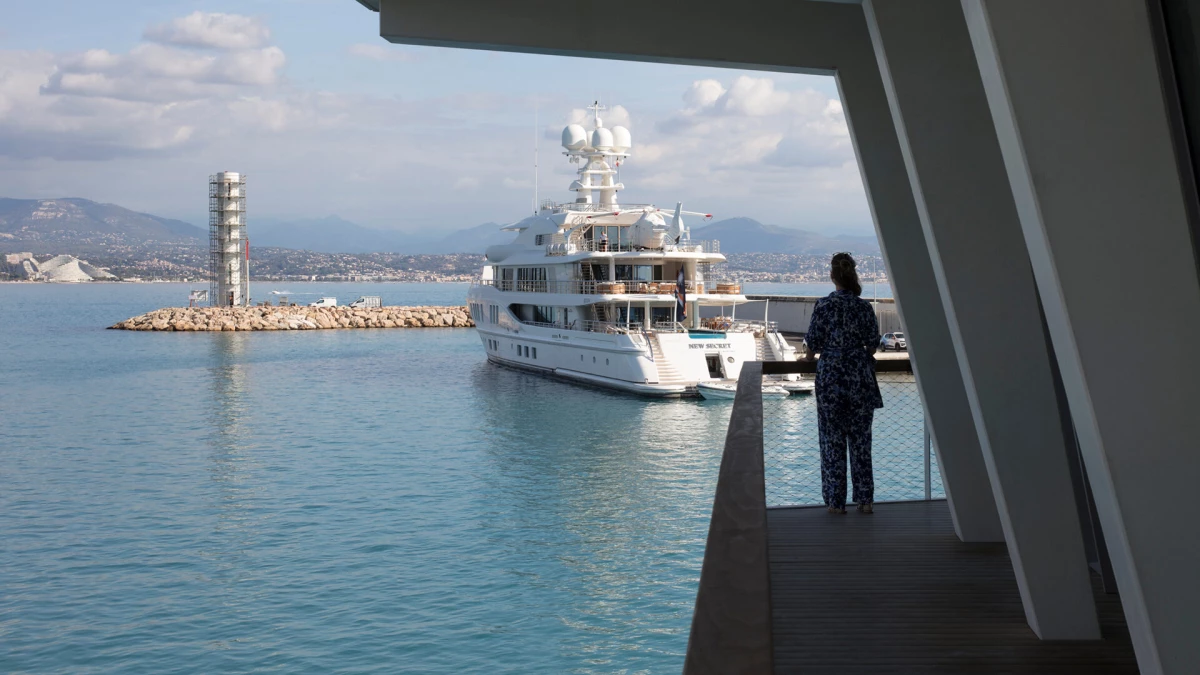
The site needed to be reconsidered as a whole to upgrade the port for the millennium-bridging future it embodies and deserves. It owes its current form to its historic and geographical context: a unique natural setting, with an arc-shaped bay and accompanying coastline, and an exceptional history that stretches back to the fifth century BC.
Taken together, these elements give the port and the city their unique identity. A multi-millennial process of geological sedimentation was followed by later layers of urban and harbour space.
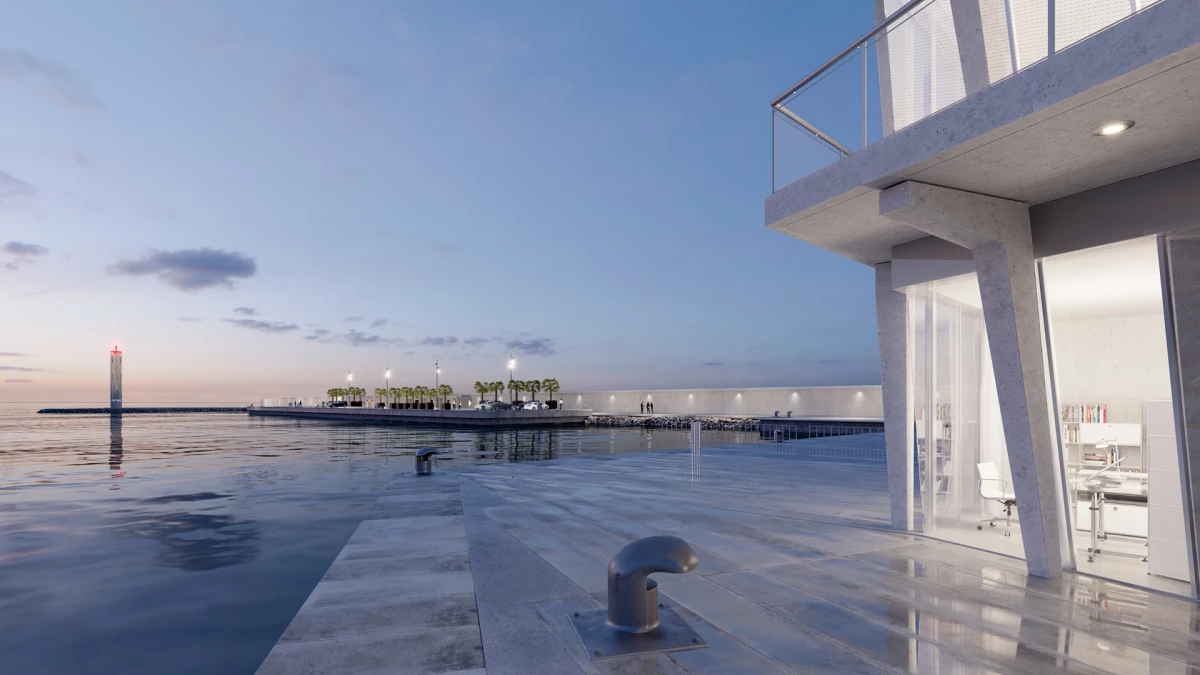
The port is ultimately the built memory of human activity. These acts of formation and transformation rely on an economy of means that systematically integrates whatever exists at the time into new development. Each action is the result of horizontal and vertical layering of and over work done before: basins and esplanades, quays and moles, jetties, breakwaters, buildings, and lighthouses. This explains the juxtaposition and superposition of maritime works and the city's buildings.
3,500 years after it was founded, the goal of Port Vauban at Antibes is to continue developing and modernising this magnificent port by grounding new changes in the history of the place. It is an ambitious project that wishes to, and must, be continuous with the great projects of the eighteenth and twentieth centuries to propel the port into the third millennium while ensuring and affirming its identity.