National Memorial to the Victims of Slavery
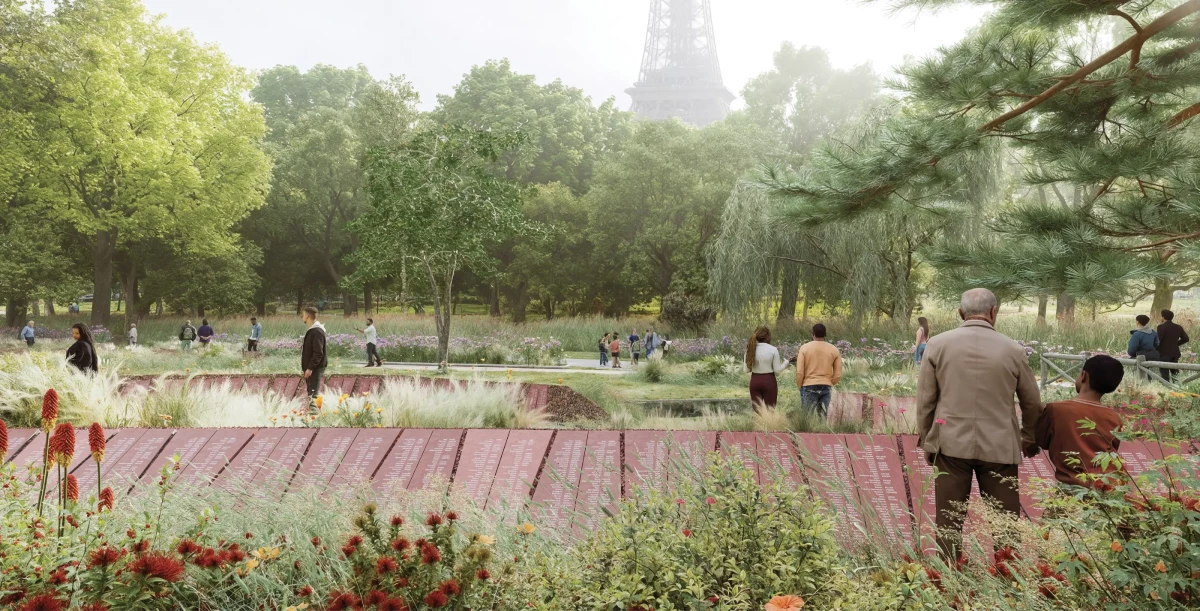
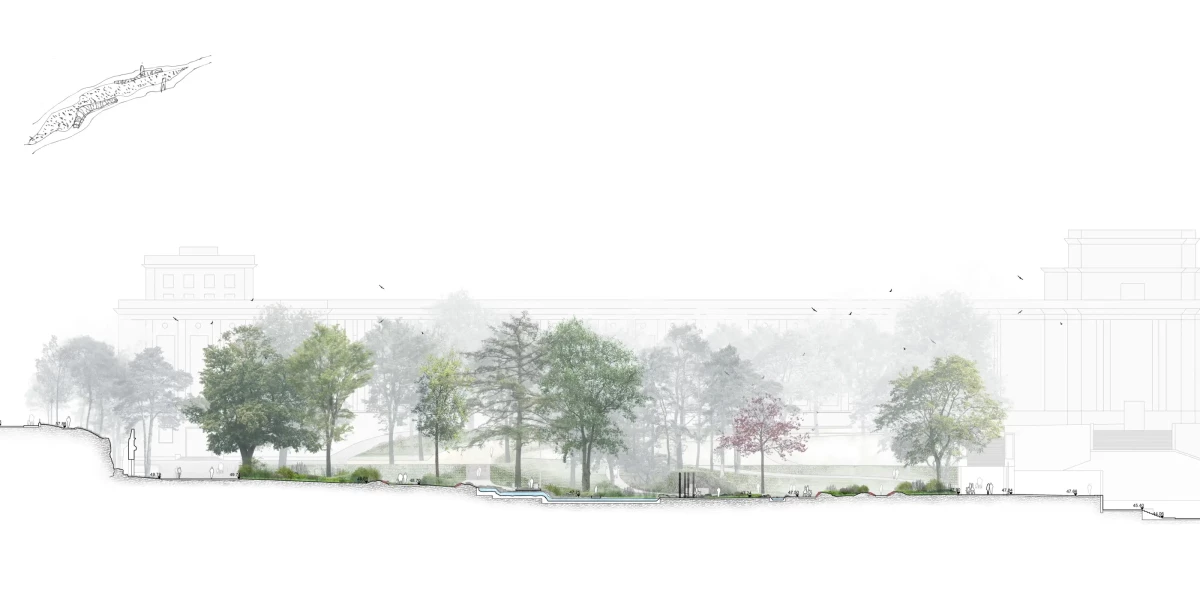
Located in the gardens of the Trocadéro, the National Memorial for the Victims of Slavery is a memorial garden with two paths: the Path of History and the Path of Names. The landscape, architectural, and typographic elements make a gesture that is artistic, poetic, and conceptual. It develops on the idea of “the spring” in its human, geographical, and historical senses.
Lucas Monsaingeon, Project director
Léa Malga, project manager
Les Eclaireurs, Lighting design
Pierre di Sciullio, Signage and wayfinding
Labeyrie et Associés, Sonorisation - Sound design
Philippe Prost, architecte / AAPP
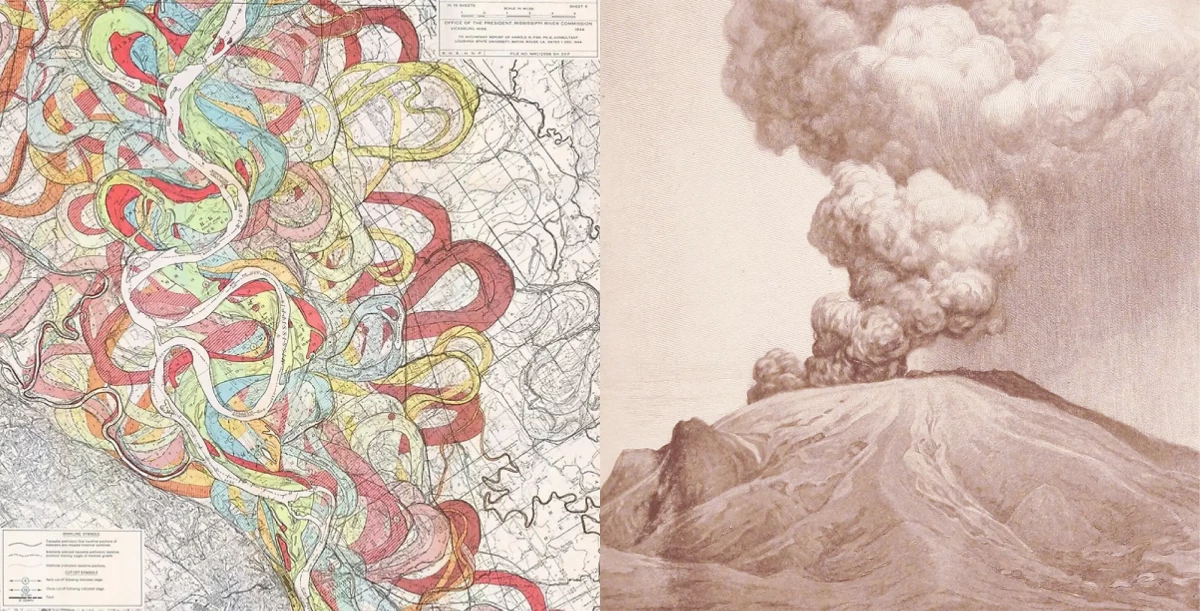
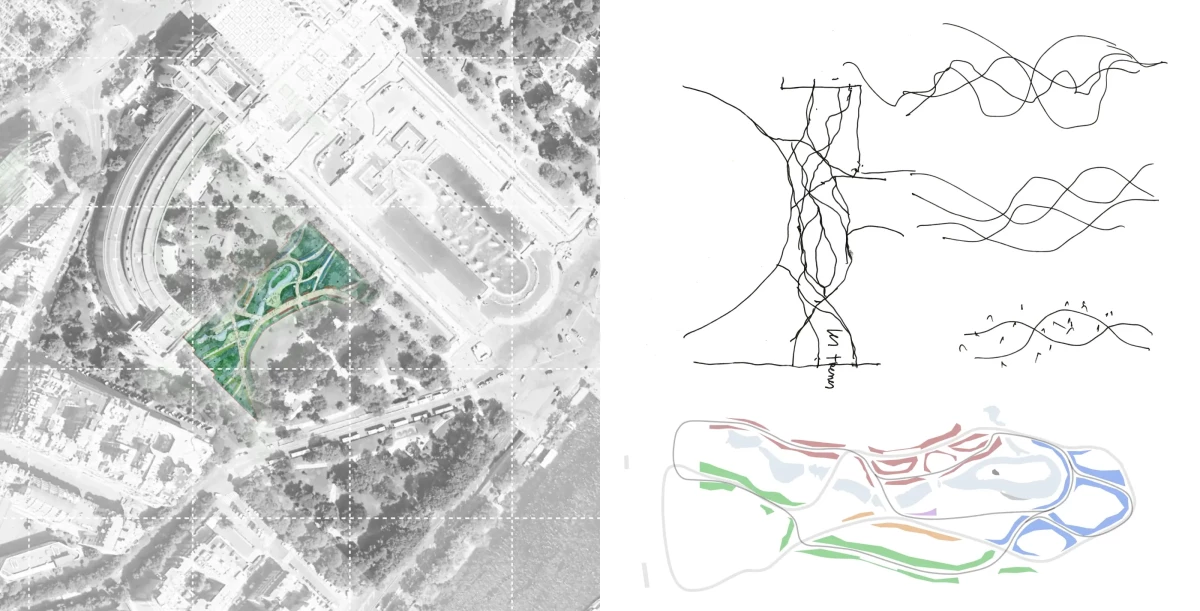
The artificial spring is a remnant of the 1878 Universal Exhibition. It ties the memorial garden project together. Water wells up symbolically – representing hope and life – and evoking the relationship with distant shores and the sea. An intimate, lush garden unfolds and reveals heightened geographical features in a miniaturised landscape inspired by fluvial geography. The watercourse meanders and loops in an expression of freedom.
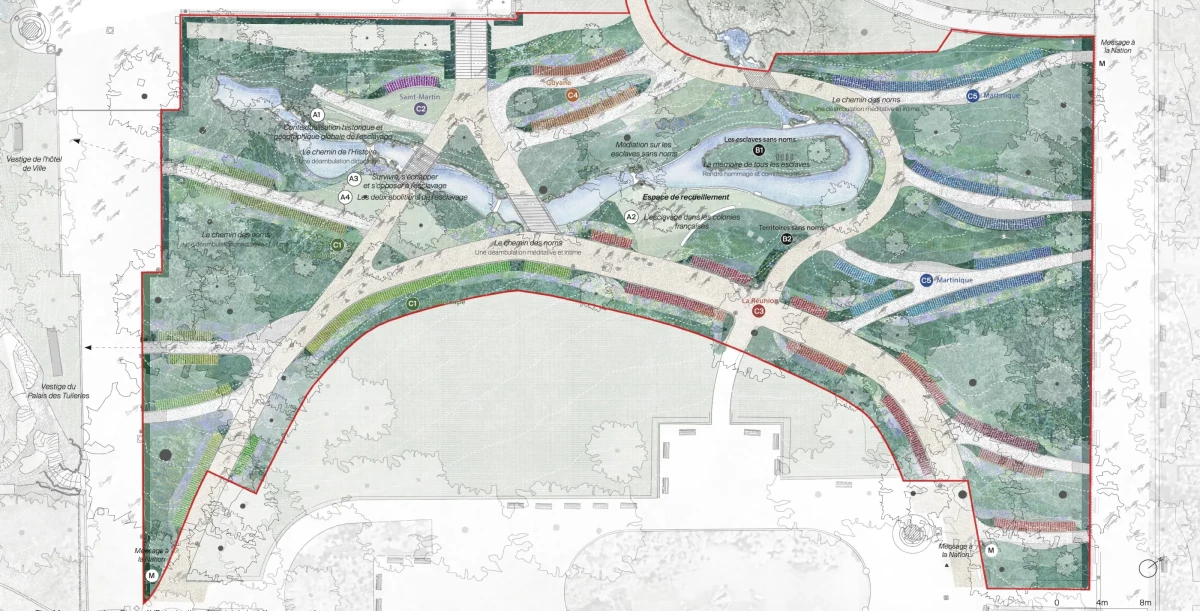
The entrances to the main pathways bear a message addressed to the nation, providing a way to interpret the memorial. From there, the network of paths forms a double loop with the Path of Names and the Path of History.
The Path of History has regularly spaced information panels that provide new historical context. A series of destinations is carefully integrated into the topography and pre-existing features of the site.
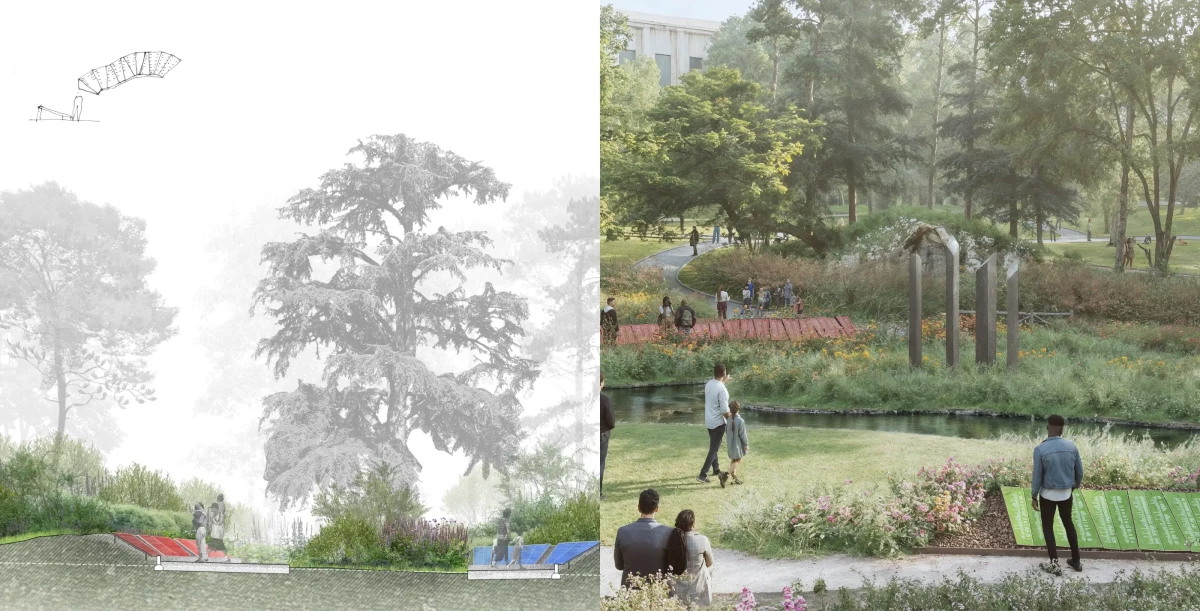
The Path of Names makes the invisible visible, with the 215,000 names of enslaved people freed in Martinique, Guadeloupe, Saint-Martin, Guiana, and Réunion inscribed on panels made of enamelled lava stone and arranged in volcanic “flows.”
We created a large space for contemplation at the centre of the memorial garden, where four monoliths of raw natural lava stone recall the memory of the four million victims whose names have not been passed along to us. Additional panels speak to places that were not covered by the 1848 abolition of slavery: Saint-Louis and Gorée, Haiti, Saint-Barthélemy, and Mayotte.
The project has a light touch when it comes to the overall architectural and landscape design: build on what already exists, add only a modest new layer, minimise excavation and earthworks, and make use wherever possible of prefabricated and proven materials and processes.